
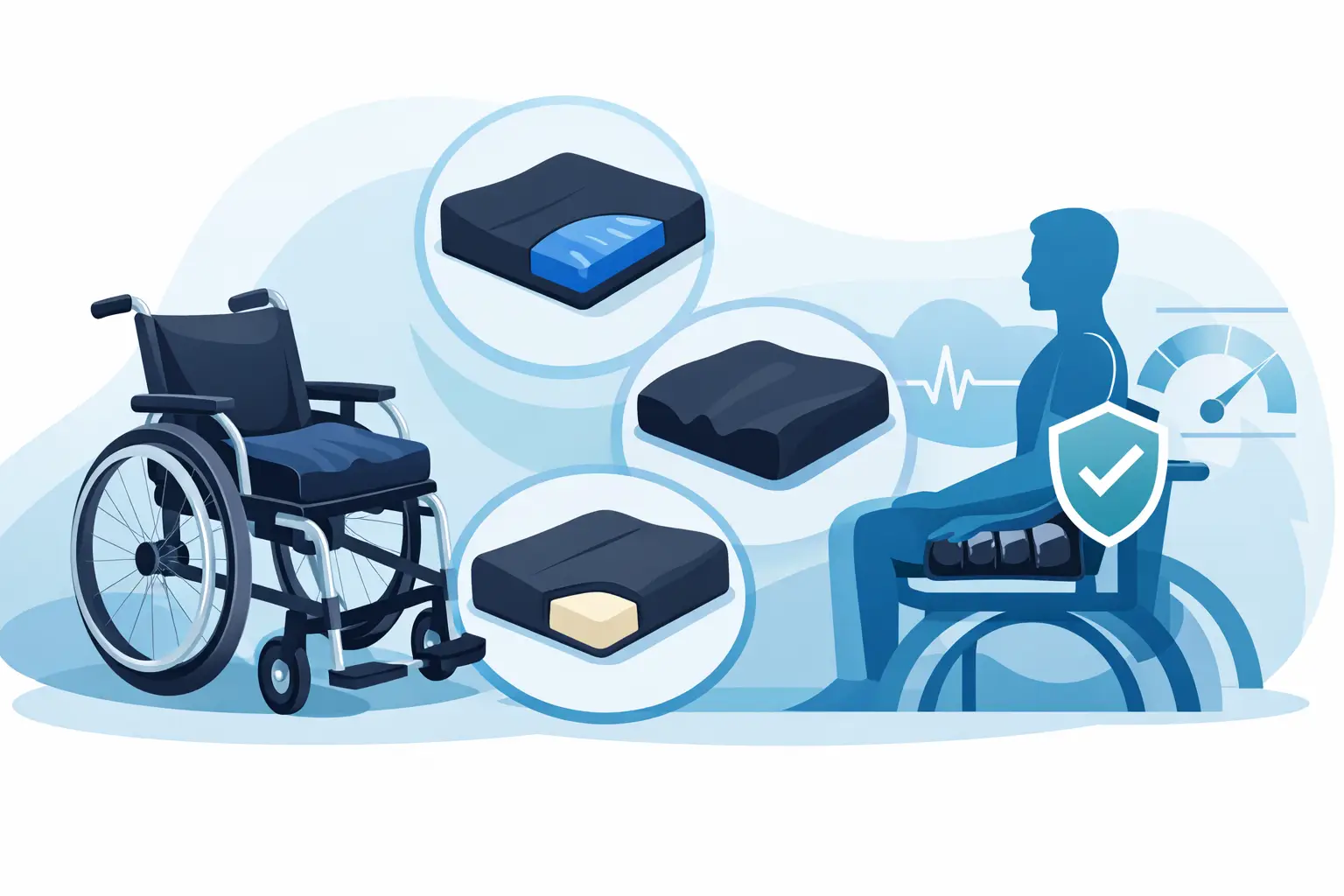
Wheelchair Cushion Selection Guide for Safer Seating
A cushion that feels soft during a quick trial can still be the wrong choice after six hours of sitting. For people who use a wheelchair throughout the day, the seat cushion affects skin protection, pelvic stability, transfers, comfort, and the ability to maintain a functional posture. This wheelchair cushion selection guide helps caregivers, clinicians, facility teams, and homecare purchasers identify the factors that should drive a safe, practical decision.
The best cushion is not automatically the most expensive or the thickest model. Selection depends on the user’s skin condition, sensation, mobility, body shape, sitting tolerance, transfer method, wheelchair configuration, and care environment. A cushion should be evaluated as part of the complete seating system, not as an isolated accessory.
Start With the User’s Clinical and Daily Needs
Begin by identifying what the cushion must accomplish. A user who can perform frequent independent weight shifts has different needs than someone with limited sensation, poor trunk control, a history of pressure injuries, or dependence on caregivers for repositioning.
Skin risk is a primary consideration. Reduced sensation, fragile skin, poor circulation, moisture exposure, previous pressure injuries, weight loss, diabetes, prolonged sitting, and inability to reposition all increase risk. For these users, pressure redistribution and regular skin checks should take priority over a cushion selected only for comfort.
Postural needs matter just as much. Pelvic instability can lead to sliding forward, pelvic obliquity, rotation, fatigue, and uneven loading on bony areas. A cushion with contouring or positioning features may help support a more stable sitting position. However, aggressive contouring can make transfers harder for some users or place pressure in the wrong area when the cushion is not matched to the person’s anatomy.
Daily routines also shape the right choice. Consider how long the person sits without a break, whether they transfer independently, whether the chair is used indoors or outdoors, and whether caregivers can inspect, clean, and maintain the product. A cushion that requires careful inflation checks may be appropriate in a skilled setting but less practical when consistent monitoring is not available.
Understand the Main Cushion Materials
Most wheelchair cushions use foam, gel, air, or a combination of these materials. Each has useful applications and meaningful trade-offs.
Foam cushions
Foam cushions are commonly selected for general comfort, mild positioning needs, and lower-risk users. They are usually lightweight, simple to manage, and available in flat or contoured designs. Higher-quality foam can provide reasonable immersion and support, while lower-density foam may compress over time and lose its protective qualities.
Foam is often a practical choice when ease of use, stable transfers, and low maintenance are priorities. It may not provide adequate pressure redistribution for a person with significant skin risk or a history of pressure injuries unless it is part of a clinically appropriate therapeutic design.
Gel cushions
Gel cushions use fluid or gel inserts to help distribute pressure and can offer a stable, grounded seating feel. They may suit users who need pressure redistribution along with improved pelvic stability. Some models combine gel with foam to balance support, comfort, and weight.
The trade-off is that gel cushions can be heavier and may require attention to gel placement. Temperature sensitivity, fluid migration, and the user’s ability to maintain a consistent seated position should also be considered. A gel cushion is not automatically a pressure-injury solution if the user bottoms out, slides, or sits asymmetrically.
Air-cell cushions
Air-cell cushions can provide high levels of pressure redistribution by allowing the body to immerse into interconnected air cells. They are often considered for users with high skin risk, existing skin concerns, or a need for individualized pressure management.
They also require more active maintenance. Inflation must be set correctly, checked regularly, and adjusted as needed. Underinflation can allow bottoming out, while overinflation can reduce immersion and increase localized pressure. Some users may find air cushions less stable during transfers or when reaching, although designs and stability features vary.
Hybrid and positioning cushions
Hybrid cushions combine materials such as foam, air, gel, or viscoelastic inserts. They can address multiple needs at once, including pressure redistribution, positioning, vibration reduction, and transfer stability. These cushions are often useful when a basic material category does not adequately address the full clinical picture.
For users with pronounced pelvic asymmetry, fixed deformities, or complex postural needs, a seating evaluation may identify the need for a more specialized cushion or custom seating solution. The goal is not simply to fill space under the user. It is to support an aligned, sustainable position without creating new pressure points.
Check Wheelchair Fit Before Ordering
Cushion dimensions must work with the wheelchair, not just the user’s hip width. Measure the usable seat width and depth of the chair, accounting for armrests, side guards, seating hardware, and any back support system. A cushion that is too narrow can leave inadequate support. One that is too wide may interfere with armrests or prevent proper placement in the seat sling.
Seat depth is equally important. The cushion should support the thighs without pressing into the back of the knees. If it is too deep, it may encourage sliding or make it difficult to reach the footrests. If it is too short, thigh support may be reduced and pressure may concentrate under the pelvis.
Cushion height changes the user’s seated position. A thicker cushion can improve immersion, but it may raise the user enough to alter foot support, armrest height, transfer mechanics, head clearance, or the ability to propel a manual wheelchair. After adding a cushion, confirm that the feet are properly supported and that the user can still reach needed surfaces safely.
Also verify the cushion’s weight capacity. Bariatric users and anyone near a product’s stated limit need a cushion designed for their body weight and pressure-management needs. Exceeding the rated capacity can compromise performance and shorten product life.
Use a Practical Trial and Inspection Process
A cushion should be assessed after real use, not only while the user is sitting briefly in a showroom or care room. Observe posture, transfers, and tolerance over the course of normal activities. If possible, involve the user, caregiver, therapist, nurse, or seating specialist in the review.
Use this checklist during the first days and weeks of use:
- Confirm the pelvis is positioned back in the chair without persistent sliding or leaning.
- Check for bottoming out according to the manufacturer’s instructions.
- Inspect skin regularly, especially over the tailbone, sitting bones, hips, and thighs.
- Verify that footrests, armrests, lap belts, and back supports still fit and function correctly.
- Review cover condition, moisture management, cleaning requirements, and any inflation or adjustment schedule.
Redness that does not fade after pressure is relieved, new pain, numbness, worsening posture, or repeated sliding warrants prompt reassessment. For users with an open pressure injury, recent skin breakdown, complex neurological conditions, or major postural asymmetry, selection should be guided by a qualified clinician or seating professional.
Plan for Maintenance and Continuity of Care
A therapeutic cushion works only if it remains functional. Covers should be inspected for tears, moisture damage, and loss of stretch. Foam should be checked for permanent compression. Air cushions need routine inflation checks, and valves should be protected from damage. Follow the manufacturer’s cleaning instructions, particularly in long-term care and shared-equipment settings where infection-control procedures are necessary.
For facilities and homecare programs, it is useful to document the cushion model, size, date placed in service, user weight range, and required maintenance steps. This reduces confusion when a chair is serviced, a user transitions between settings, or equipment is replaced after discharge. It also helps purchasing teams source compatible replacement covers, pumps, and repair components without delaying care.
DME Medical Supplies can help purchasers narrow options across routine mobility seating and more complex rehabilitation needs, especially when product availability, compatibility, and replacement timing are operational concerns.
A wheelchair cushion should make daily care safer and more sustainable, not add uncertainty. When the cushion matches the user’s clinical risk, posture, chair dimensions, and care routine, it becomes a practical part of protecting skin, supporting mobility, and preserving comfort through every transfer and every hour seated.