
What Is a Low Air Loss Mattress and Who Needs One?
A patient who stays in one position for hours can develop a hot, damp area of skin long before a visible pressure injury appears. That is the care problem a therapeutic support surface is designed to address. So, what is a low air loss mattress? It is a powered mattress system that uses a steady flow of air through specialized air cells to help manage moisture and heat around the patient while redistributing pressure.
Low air loss mattresses are used in hospitals, long-term care facilities, rehabilitation settings, and at home for people with limited mobility or a high risk of skin breakdown. They are not a substitute for a complete turning, skin-inspection, and continence-care program. They can, however, be an important part of that program when the surface is matched to the patient, bed frame, and clinical plan.
What Is a Low Air Loss Mattress?
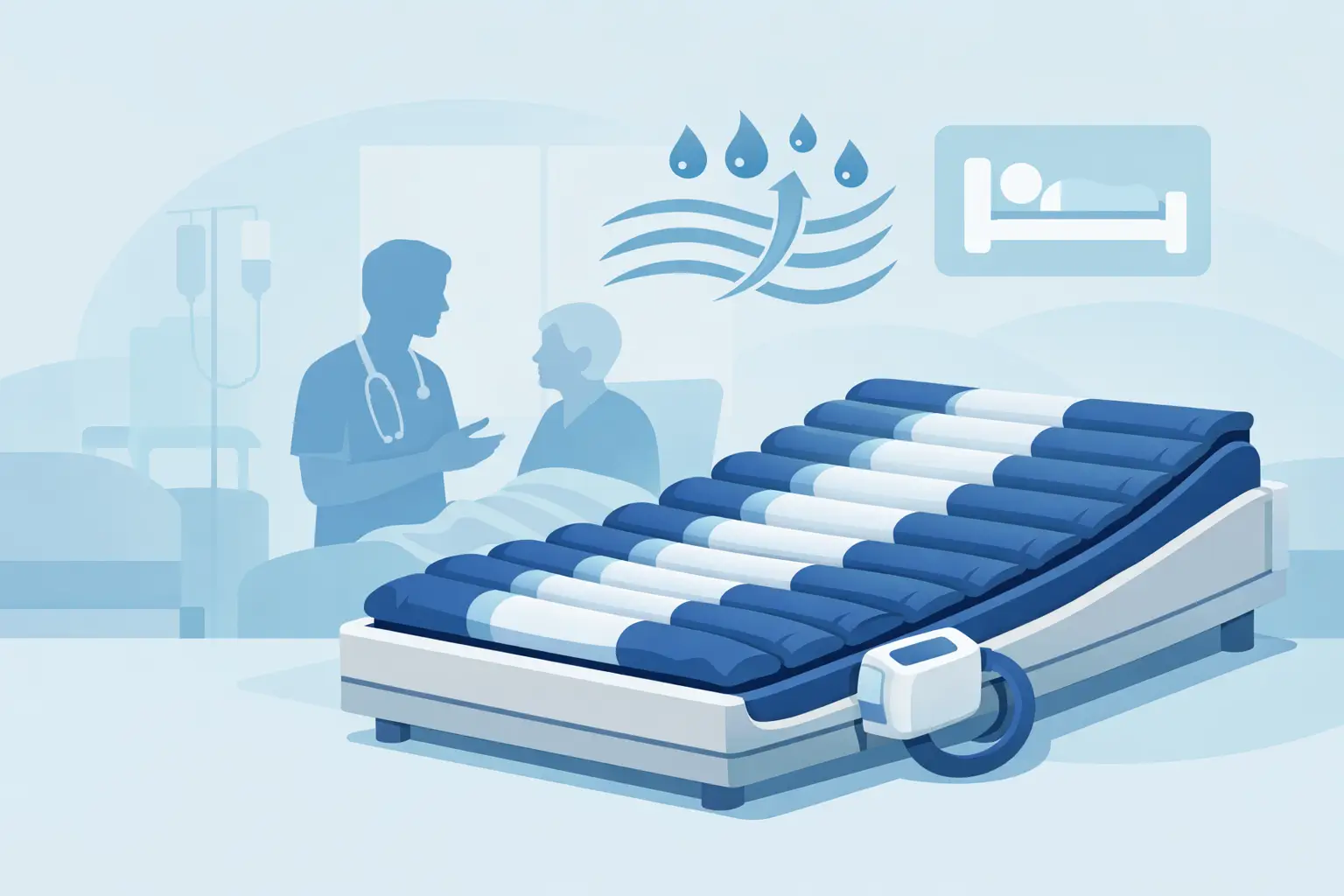
A low air loss mattress typically has a series of air-filled cells connected to an external pump. The pump maintains the cells at a prescribed level of inflation and sends a low volume of air through tiny perforations in the cover or cells. This airflow helps move heat and moisture away from the skin, often described as microclimate management.
The patient rests on a surface that conforms more closely to the body than a standard foam mattress. By spreading body weight across a larger area, the mattress can reduce concentrated pressure at bony areas such as the sacrum, hips, heels, shoulder blades, and elbows. The amount of pressure redistribution depends on the design of the system, the patient’s body size and position, and whether the mattress is properly inflated.
Despite its name, a low air loss mattress does not mean that air is constantly leaking from the system. “Low air loss” refers to the controlled airflow that passes through the surface to support skin temperature and moisture control. The pump is designed to replace that air continuously.
Why moisture and heat matter
Pressure injuries are associated with more than pressure alone. Friction, shear, perspiration, wound drainage, and incontinence can weaken the skin. When moisture is trapped between the patient and the mattress cover, skin may become softer and more vulnerable to damage. Excess warmth can add to discomfort and perspiration.
A low air loss system helps create a drier, cooler resting environment. That can be especially useful for patients who perspire heavily, have moisture-related skin concerns, or require extended bed rest. It is still necessary to use appropriate incontinence products, inspect the skin routinely, and respond promptly to soiled linens or dressings.
Who May Benefit From a Low Air Loss Mattress?
The right support surface is based on mobility, skin condition, weight, medical needs, and the level of caregiver support available. A clinician should assess patients with existing wounds or significant risk factors, particularly when a surface is being selected as part of a pressure-injury prevention or treatment plan.
A low air loss mattress may be considered for a patient who spends most of the day in bed and cannot reposition independently. It may also be appropriate for someone with a history of pressure injuries, fragile skin, excessive perspiration, edema, or conditions that limit sensation and movement.
In facility care, these systems are often used for residents with higher acuity needs, postoperative restrictions, or complex wound-care requirements. In home care, they can help caregivers manage a patient who requires prolonged bed rest after hospitalization, during chronic illness, or while recovering from an injury.
The mattress alone does not determine suitability. A patient who can reposition frequently and has intact skin may do well with a high-quality non-powered pressure redistribution mattress. Conversely, a patient with an advanced wound may require a more specific therapeutic surface and wound-care direction than a basic low air loss model provides.
Low Air Loss vs. Alternating Pressure Mattresses
Low air loss and alternating pressure are often discussed together, but they work differently. Knowing the distinction helps buyers avoid ordering a system that does not meet the care need.
A low air loss mattress primarily maintains inflation and provides continuous airflow for pressure redistribution and microclimate control. An alternating pressure mattress cycles air between groups of cells. As one group inflates, another partially deflates, periodically changing the areas of the body that bear weight.
Some advanced powered support surfaces combine both features. These combination systems can provide alternating pressure while also using low air loss airflow to manage heat and moisture. They are commonly considered when a patient is highly immobile or has more complex pressure-injury concerns.
Neither feature is automatically better. Alternating pressure may be useful when frequent manual repositioning is difficult, but some patients find the movement uncomfortable or unsettling. Low air loss can be particularly valuable for moisture management, but it may not provide the same cyclic offloading as an alternating system. The clinical condition, comfort tolerance, and care plan should guide the decision.
Key Features to Evaluate Before Purchasing
Start with compatibility. Confirm that the mattress fits the intended hospital bed frame and that its dimensions work with bed rails, transfers, and other accessories. A mattress that is too narrow, too short, or too tall can create safety concerns and make caregiving more difficult.
Weight capacity matters just as much. Select a system rated for the patient’s current weight, with consideration for clothing, positioning devices, and anticipated changes in condition. Bariatric patients may need a wider frame and a bariatric therapeutic mattress rather than a standard-size model.
Also review the pump functions. Some systems offer adjustable comfort settings, static modes, alternating modes, seat-inflate functions for transfers, audible or visual alarms, and power-failure protection. These features can be helpful, but they should align with the actual environment. A home caregiver may benefit from straightforward controls and clear alarms, while a facility may need settings that support staff workflows and a broader range of patient needs.
The cover should be fluid resistant, vapor permeable, durable, and easy to clean according to the manufacturer’s instructions. Ask whether replacement covers, pumps, hoses, and repair parts are available. For facilities, this can reduce equipment downtime. For home users, it can prevent an urgent replacement need from interrupting care.
Safe Setup and Daily Use
Place the mattress on the recommended bed deck, connect the hose securely, and keep the hose free from kinks, pinching, or obstruction. The pump should be positioned where vents remain open and where staff or caregivers can hear alarms. Do not place blankets, furniture, or storage items over the pump.
After inflation, check that the patient is not bottoming out. Bottoming out occurs when the body compresses the air cells enough to come too close to the bed frame or underlying support. Many systems include a manufacturer-recommended hand check or pressure-setting procedure. Follow the product instructions rather than relying on a general rule.
Keep sheets fitted but lightweight and avoid thick pads, layered linens, or non-approved overlays that can interfere with pressure redistribution and airflow. Continue scheduled repositioning when clinically appropriate. A powered mattress supports the care plan; it does not eliminate the need for patient assessment, safe transfers, heel protection, hydration, nutrition support, or routine skin care.
Cleaning and troubleshooting basics
Clean the cover only with products approved by the manufacturer. Harsh chemicals, improper disinfectants, or saturated cleaning methods can damage the material and reduce fluid resistance. Allow the cover to dry completely before placing the patient back on the bed.
If the mattress feels soft, check the power connection, pump setting, hose connections, and any visible leaks. If an alarm sounds, respond according to the device instructions and ensure the patient remains safely supported. A mattress that cannot maintain inflation should be removed from service until the issue is resolved or replacement equipment is available.
Questions to Ask Before Selecting a System
Before ordering, identify whether the patient has an existing pressure injury, how often they can reposition, whether moisture is a persistent concern, and what level of caregiver assistance is available. Confirm bed size, mattress dimensions, patient weight, transfer needs, and whether side rails will be used.
For institutional buyers, it is also useful to consider cleaning protocols, replacement-part availability, training requirements, and turnaround time for service. For home caregivers, clear setup guidance and access to knowledgeable product support can make a meaningful difference when equipment is needed quickly.
Can a low air loss mattress be used at home?
Yes. Many low air loss systems are designed for home use with a compatible hospital bed. The caregiver should receive setup and operating instructions and know who to contact if the pump alarms or the mattress does not hold air.
Does a low air loss mattress treat pressure injuries?
It can support a treatment plan by redistributing pressure and managing moisture, but it does not replace wound care or clinical oversight. Existing wounds should be evaluated by an appropriate healthcare professional.
Does it need to run all the time?
Most powered low air loss mattresses are intended to remain connected and running while the patient is on the surface. Follow the manufacturer’s directions for transport, cleaning, power interruptions, and any static or care modes.
Choosing a low air loss mattress is ultimately a care decision, not simply a bedding purchase. When the surface, patient needs, and daily caregiving routine work together, it can help create a safer and more manageable environment for recovery and long-term care.