
Pressure Sore Prevention Products That Fit Care
A patient who remains in one position through the night can develop skin damage long before discomfort is reported. Pressure sore prevention products help reduce that risk, but they work best when selected for the patient’s mobility, medical condition, body size, skin status, and care environment. For home caregivers and clinical teams alike, the goal is not simply to purchase a cushion or mattress. It is to build a practical pressure-injury prevention plan that can be used consistently.
Pressure injuries can develop when sustained pressure, shear, friction, moisture, or poor nutrition compromise vulnerable skin and underlying tissue. Bony areas such as the heels, sacrum, hips, elbows, and shoulder blades require particular attention. A suitable product can redistribute pressure or reduce friction, but it cannot replace regular skin checks, repositioning, hygiene, and prompt clinical evaluation when skin changes appear.
Start With the Patient’s Actual Risk
Product selection should begin with an assessment rather than a catalog category. A person who walks independently but spends several hours in a chair has different needs than a bedbound patient with limited sensation, incontinence, edema, or a history of pressure injuries.
Consider how much the person can reposition without help, how long they spend in bed or seated, whether they slide down in bed or a recliner, and whether moisture management is an ongoing issue. Recent hospitalization, poor circulation, diabetes, spinal cord injury, neurological conditions, and bariatric care needs can also increase risk. Facility teams may use a standardized risk assessment tool as part of their protocol, while home caregivers should involve the patient’s clinician when there are concerns about skin integrity.
A product should support the care plan, not create new barriers. For example, a deep, highly contoured cushion may offer effective pressure redistribution but make transfers more difficult for a patient who needs a firm surface to stand from. A mattress replacement system may be appropriate for a high-risk bedbound patient, while an overlay may be sufficient for a short-term recovery period with lower risk. The right answer depends on the clinical picture and on what caregivers can safely manage every day.
Core Pressure Sore Prevention Products by Care Need
Therapeutic mattress overlays and replacement mattresses
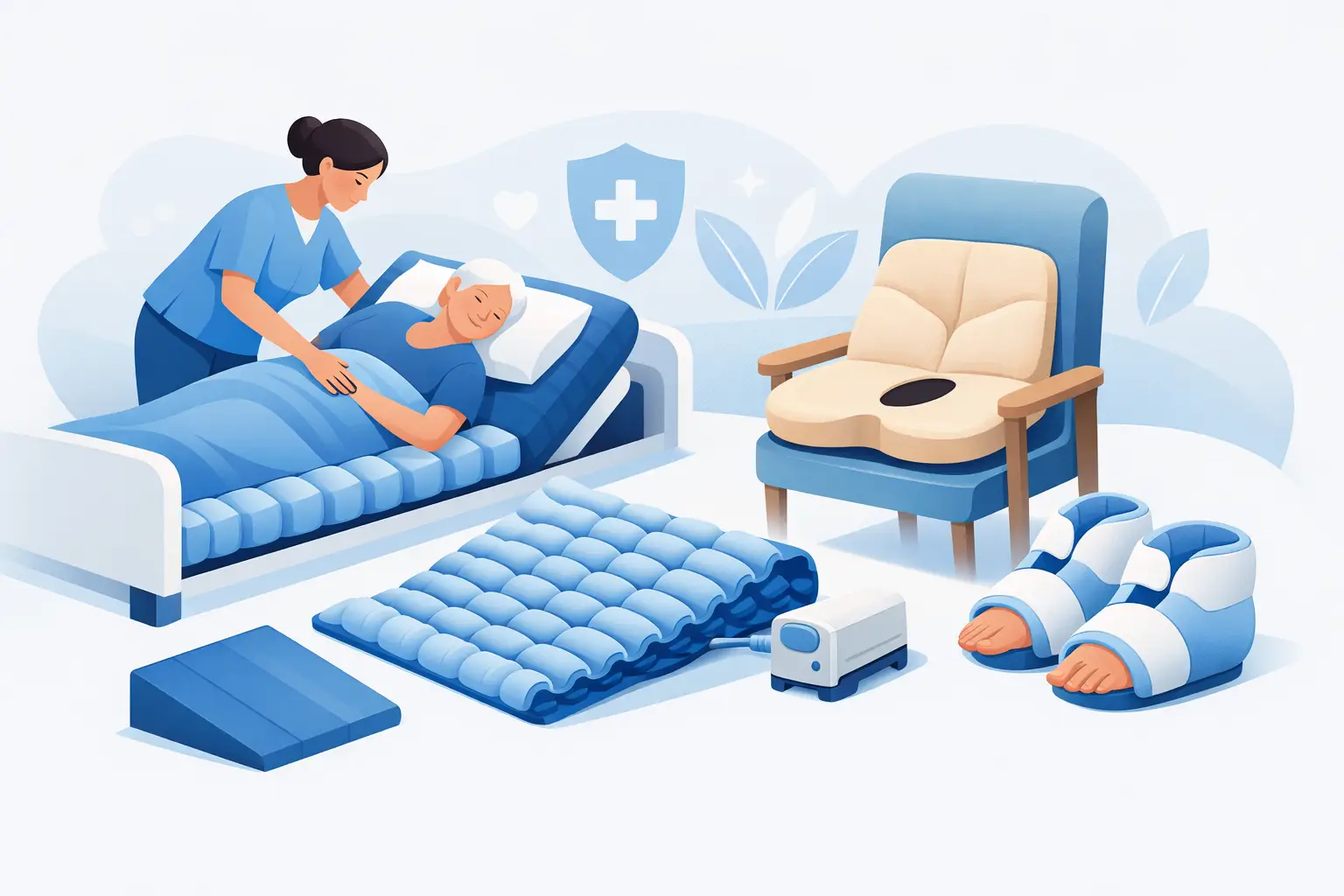
Support surfaces are often the foundation of prevention for patients who spend extended time in bed. Foam overlays can improve pressure redistribution on a standard mattress and are commonly used for lower to moderate risk when the underlying mattress is still supportive. They are relatively simple to install and may be a practical option for home recovery or supplemental facility inventory.
A therapeutic foam mattress replacement is generally a better choice when the existing mattress is worn, sagging, or unable to provide adequate support. Multi-layer foam designs can distribute body weight more effectively while helping with immersion and envelopment. These surfaces require correct sizing for the bed frame and should be evaluated for safe transfer performance and compatibility with rails, if rails are in use.
Alternating pressure mattresses use powered air cells that cycle pressure across different areas of the body. They may be considered for patients with very limited mobility, high risk, or existing skin concerns under clinical direction. The trade-off is operational: the pump must remain functional, tubing must stay properly positioned, and staff or family members need to know how to respond to alarms, power interruptions, and changes in patient condition. A powered surface is not a set-it-and-forget-it solution.
Wheelchair and bedside seating cushions
Seated pressure management deserves the same attention as bed positioning. Wheelchair users and patients who spend much of the day in recliners or bedside chairs can experience significant pressure at the ischial areas and tailbone. Pressure redistribution cushions are available in foam, gel, air-cell, and combination designs.
Foam cushions are often straightforward and durable, making them suitable for many routine needs. Gel or air-based cushions can provide greater immersion and pressure distribution for some higher-risk users, but they may require more frequent inspection, inflation checks, or positioning support. A cushion that is improperly inflated or placed backward can reduce its effectiveness.
Seat width, depth, weight capacity, posture, and transfer ability matter as much as cushion material. A cushion that overhangs the chair, compresses fully under the user, or changes the user’s foot placement can affect stability. For long-term wheelchair users, seating and positioning assessment by a qualified clinician or complex rehab professional may be needed.
Heel protectors and offloading devices
Heels are particularly vulnerable because there is little soft tissue between the bone and the support surface. Pillows can sometimes be used to float the heels, but they can shift out of place or create pressure behind the knee if positioned poorly. Purpose-designed heel protectors and offloading boots help keep the heel elevated while protecting the lower leg.
Look for a device that maintains heel suspension without excessive tightness, overheating, or pressure on the Achilles area. The patient’s circulation, leg shape, edema, and ability to tolerate the device should be checked routinely. Devices should be removed according to the care plan for skin inspection and hygiene.
Positioning aids and transfer-support products
Repositioning wedges, bolsters, and pillows can help maintain a side-lying position and reduce direct pressure on the sacrum or hips. They are useful in both homecare and institutional settings, particularly when caregivers need a reliable way to support a position between scheduled turns. Positioning products should be selected with attention to cover material, cleaning requirements, and whether they remain stable during use.
Friction-reducing sheets, transfer devices, and bed mobility aids also have a role in prevention. Dragging a patient across bedding can create shear and friction, even when the mattress is high quality. Proper transfer equipment and staff training can reduce the need to pull on the patient’s skin or clothing during repositioning.
Match Products to the Care Setting
In a home environment, caregivers often need products that are easy to set up, clean, and monitor. A mattress replacement may be more practical than a complicated system if the patient’s risk is moderate and the caregiver cannot reliably manage a powered pump. Clear instructions, appropriate bed sizing, and fast access to replacement parts can prevent avoidable downtime.
In long-term care, rehabilitation, and acute care environments, durability, infection-control procedures, inventory availability, and weight capacity are major purchasing factors. Facilities may benefit from standardizing certain support surface categories while maintaining higher-acuity options for patients whose needs change. Product standardization can simplify staff education, but it should not override individualized clinical decisions.
For bariatric care, confirm the weight capacity of every component, including the bed frame, mattress, cushion, transfer aid, and wheelchair. A product rated below the patient’s weight may bottom out, lose its pressure-redistribution performance, or create a safety hazard. Pediatric users also require size-appropriate surfaces and clinical input rather than scaled-down assumptions from adult equipment.
Use Products Within a Daily Prevention Routine
Even the most appropriate equipment needs consistent use. Skin should be observed at least daily, with attention to persistent redness, purple or maroon discoloration, warmth, hardness, blisters, open areas, or patient reports of pain and burning. Darker skin tones can show early damage differently, so changes in temperature, texture, and tenderness are especially relevant.
Repositioning schedules should be individualized by the care team. Some patients require frequent assistance, while others can perform weight shifts independently. The schedule must account for the support surface in use, the patient’s tolerance, medical stability, and whether they are sliding or becoming moist. Avoid massaging reddened bony areas, as this can further damage compromised tissue.
Keep linens smooth and dry, manage incontinence promptly, and minimize layers between the patient and the support surface. A thick stack of pads, folded blankets, or personal items placed beneath the patient can interfere with the performance of a therapeutic mattress or cushion. Nutrition, hydration, pain control, and mobility support are also part of prevention because skin cannot remain healthy without adequate overall care.
Questions to Ask Before Ordering
Before purchasing, confirm the patient’s weight, height, primary position, mobility level, and the dimensions of the bed or chair. Ask whether there is intact skin, a prior pressure injury, or an active wound requiring clinician-directed treatment. Also verify cleaning requirements, power needs for powered systems, warranty coverage, and delivery timing if a discharge or urgent home setup is approaching.
For organizations, it is useful to document the product selected, the reason for selection, inspection expectations, and who is responsible for setup. A mattress or cushion that arrives quickly still needs to be installed correctly and checked after the first use. DME Medical Supplies can help buyers identify compatible therapeutic surfaces, cushions, positioning equipment, and related care products when product specifications or availability need clarification.
When skin changes are new, worsening, open, draining, or accompanied by fever, increased pain, or odor, contact the appropriate clinician promptly. The most effective prevention product is the one that fits the patient, supports the caregiver’s routine, and is paired with attentive daily care.