
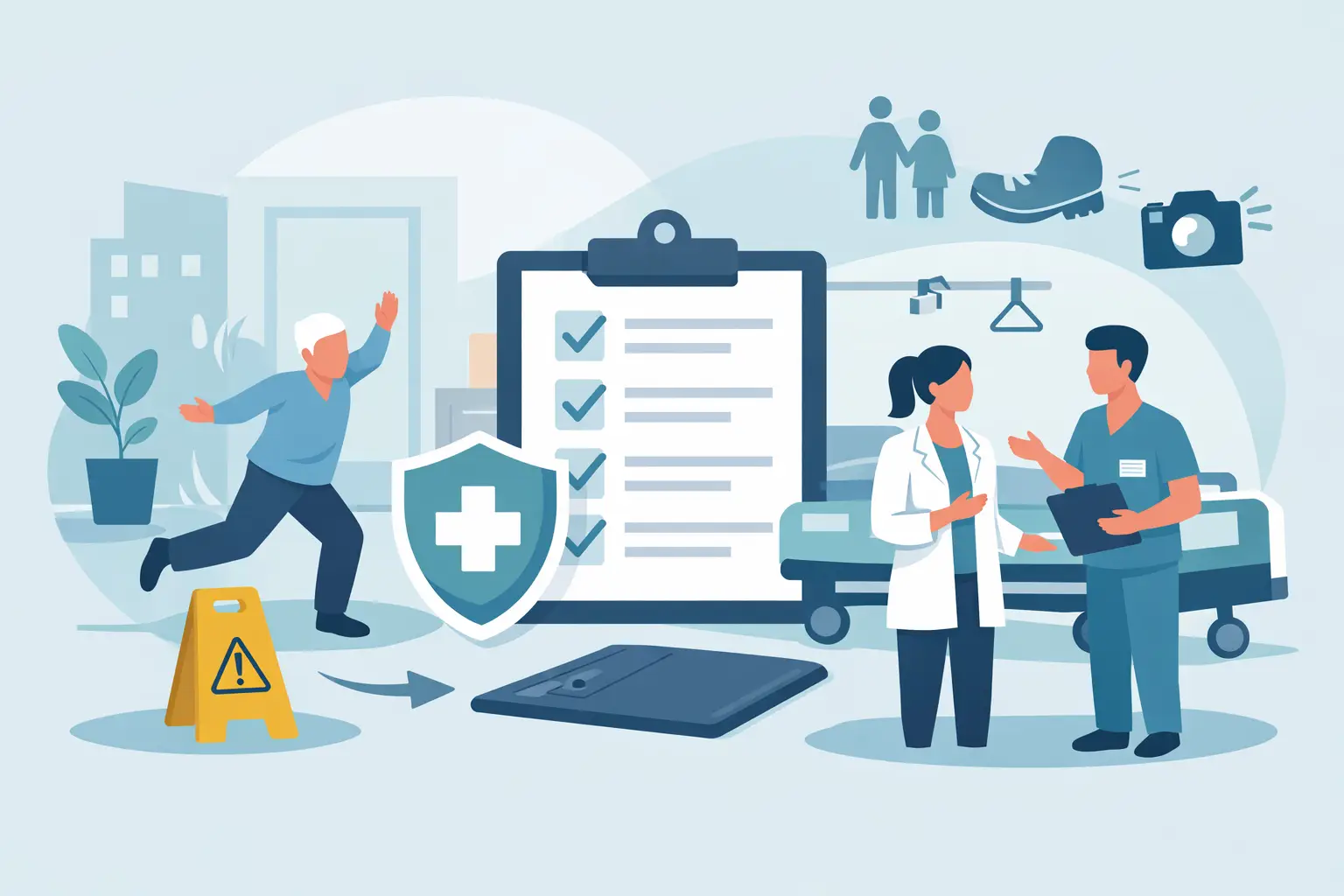
Facility Fall Reduction: A Practical Plan
A resident who falls while reaching for a walker, transferring after toileting, or getting out of bed at night rarely has one isolated risk factor. Effective facility fall reduction requires staff to look at the full care environment: the resident’s condition, the task being attempted, the equipment in use, and the response process when needs change. The goal is not to keep people in bed or eliminate independent movement. It is to make necessary movement safer while protecting comfort, dignity, and quality of life.
For long-term care, skilled nursing, rehabilitation, and other residential care settings, this work is operational. It depends on consistent assessments, properly selected equipment, timely maintenance, and communication across shifts. Small gaps can compound quickly, especially when staffing patterns, medications, mobility levels, or cognition change.
Start Facility Fall Reduction With a Clear Risk Picture
A fall-risk score is useful, but it should not be the entire plan. Two residents may receive the same score while needing very different interventions. One may be steady during the day but disoriented after waking. Another may walk independently but become unsafe when managing oxygen tubing, an IV line, or a bathroom threshold.
Review fall risk at admission, after a fall, after hospitalization, following a significant medication change, and whenever function declines or improves. Staff should document more than a general designation of high or low risk. Record the situations that create risk: unassisted transfers, urgency related to toileting, poor footwear, weakness on one side, low vision, wandering, fatigue, or attempts to reach items outside the bed.
This information should be visible in the care plan and communicated in practical terms during shift handoff. “Needs one-person assist with pivot transfers after 8 p.m.” is more actionable than “fall risk.” The same applies to equipment instructions. If a resident requires a gait belt, a specific walker height, or a wheelchair with properly positioned footrests, the care team needs that detail at the point of care.
Look for patterns, not just incidents
Every fall should be reviewed promptly, but a facility should also look for patterns over time. Consider location, time of day, activity, staffing level, footwear, medication timing, and equipment condition. A cluster of falls near bathrooms may point to inadequate lighting, delayed toileting assistance, poorly placed grab bars, or a need for bedside commodes for selected residents. Repeated transfer incidents may indicate a mismatch between resident ability and the bed, chair, or mobility device being used.
A post-fall review should avoid assigning blame. Its purpose is to identify contributing conditions and make a specific correction. A vague instruction to “monitor closely” does not change the environment or the workflow.
Make Mobility and Transfers Safer
Mobility support is a central part of fall prevention, but more equipment is not always better. The right device is one that matches the resident’s strength, balance, cognition, body size, and daily routines. An improperly sized walker can encourage poor posture and unstable movement. A wheelchair without adequate positioning support can lead to sliding or unsafe attempts to reposition independently.
Beds, chairs, and transfer surfaces deserve the same level of attention. Set bed height so the resident can place both feet firmly on the floor when sitting at the edge. Confirm brakes operate correctly on beds, wheelchairs, commodes, and shower chairs. Footrests should not become a trip hazard during transfers, and worn caster locks should be addressed before they fail during use.
For residents who require assistance, a transfer aid can reduce risk for both the resident and the caregiver. Gait belts may be appropriate for ambulatory transfers when the resident can participate safely. Sit-to-stand lifts can support residents with partial weight-bearing ability, while full-body lifts may be needed when a resident cannot safely stand. Selection should follow the resident’s assessed ability and the manufacturer’s instructions, including weight capacity and sling compatibility.
Staff training matters as much as the product. A lift stored in a hallway is not a fall-prevention measure if staff are unsure which sling to use or cannot access it quickly. Facilities should standardize training for common transfer scenarios and reassess competency when new equipment is introduced.
Reduce Bathroom and Nighttime Risks
Bathroom-related falls are common because residents may feel urgency, fatigue, dizziness, or a desire for privacy. A thoughtful toileting plan can be more effective than simply increasing alarms. Scheduled toileting, prompt response to call systems, and clear knowledge of each resident’s assistance level reduce the likelihood of unassisted transfers.
The physical setting should support safe movement. Non-slip flooring, adequate lighting, securely installed grab bars, raised toilet seats when clinically appropriate, and stable shower chairs can help residents maintain balance. Keep frequently used items within reach and remove loose mats, clutter, and poorly routed cords. If a resident has limited nighttime mobility, a bedside commode may reduce the distance and hazards involved in reaching the bathroom.
Nighttime conditions require their own review. Ensure pathways from bed to bathroom are clear, room lighting is easy to activate, and mobility aids are positioned consistently. Residents should not need to search for glasses, a cane, a walker, or a call device after waking. For a person using respiratory equipment, tubing should be routed to allow movement without tangling or creating a tripping hazard.
Match Support Surfaces and Bed Setup to the Care Plan
Pressure redistribution and fall prevention can sometimes pull in different directions. A mattress or overlay that improves pressure management may also affect edge stability, bed height, and the ease of transfers. The answer is not to avoid therapeutic support surfaces. It is to evaluate the full bed system after installation.
Check whether the resident can still transfer safely from the bed edge, whether side rails are clinically appropriate, and whether assistive devices remain within reach. Side rails may offer support for repositioning for some residents, but they can also create entrapment or climbing risks. Their use should be based on an individualized assessment, not treated as a default safety measure.
Low beds can reduce injury severity for selected residents, particularly those who may roll or slide from bed. However, a low bed can make standing more difficult for someone with weak legs or limited hip motion. Consider the resident’s transfer ability, footwear, assist level, and care goals before changing bed height.
Build Reliable Equipment Readiness Into Daily Operations
Facility fall reduction can be undermined by ordinary equipment failures: a loose hand grip, an uneven walker leg, a missing rubber tip, a damaged wheelchair brake, or a shower chair that rocks on the floor. These issues are preventable when inspection is built into regular routines.
A practical readiness process includes checking mobility aids and transfer equipment before use, removing damaged items from service immediately, and maintaining a clear route for repair or replacement. Inventory planning also matters. A facility may know the right intervention but lose time when the correct size of gait belt, replacement walker tip, compatible sling, or commode is unavailable.
Procurement teams should consider standardization where possible. Using a manageable range of reliable products can simplify staff education, replacement-part sourcing, cleaning processes, and preventive maintenance. At the same time, standardization should not erase the need for bariatric, pediatric, or complex rehabilitation options when those needs arise.
DME Medical Supplies can support facilities and caregivers with broad access to mobility, bath safety, patient room, transfer, and therapeutic support products, along with purchasing guidance when equipment compatibility or replacement parts are a concern.
Use Technology With a Defined Purpose
Bed alarms, chair alarms, floor mats, sensor systems, and video monitoring may have a role in a fall-prevention program, but they are not substitutes for supervision or individualized care. An alarm can alert staff that a resident is moving. It cannot ensure staff arrive before an unsafe transfer occurs.
Before implementing a monitoring product, define the problem it is meant to solve. Is the concern unsupervised bed exits, delayed response times, nighttime wandering, or repeated attempts to transfer without help? Then assess whether the product creates added burdens, such as alarm fatigue, sleep disruption, resident distress, or frequent false alerts.
Technology works best when paired with a response expectation. Staff should know who responds, how quickly, and what care-plan adjustment follows if alerts become frequent. Repeated alarms are often a signal that the resident needs a different intervention, not a louder device.
Keep the Plan Current and Person-Centered
A resident’s risk level can change in a single day. Infection, dehydration, pain, new footwear, constipation, medication adjustments, or recovery from therapy may alter balance and judgment. Encourage nursing, therapy, environmental services, and direct care staff to report changes early rather than waiting for an incident.
The strongest programs balance safety with autonomy. Restricting movement may reduce one immediate risk while creating others, including deconditioning, loss of confidence, skin concerns, and reduced participation in daily life. When a resident wants to walk to meals or toilet independently, the care plan should focus on what support makes that activity safer.
A practical fall-reduction program is built one real situation at a time: a safer transfer, a clear path to the bathroom, a properly maintained walker, and a staff response that matches the resident’s needs. Those details are where safer care becomes reliable care.