
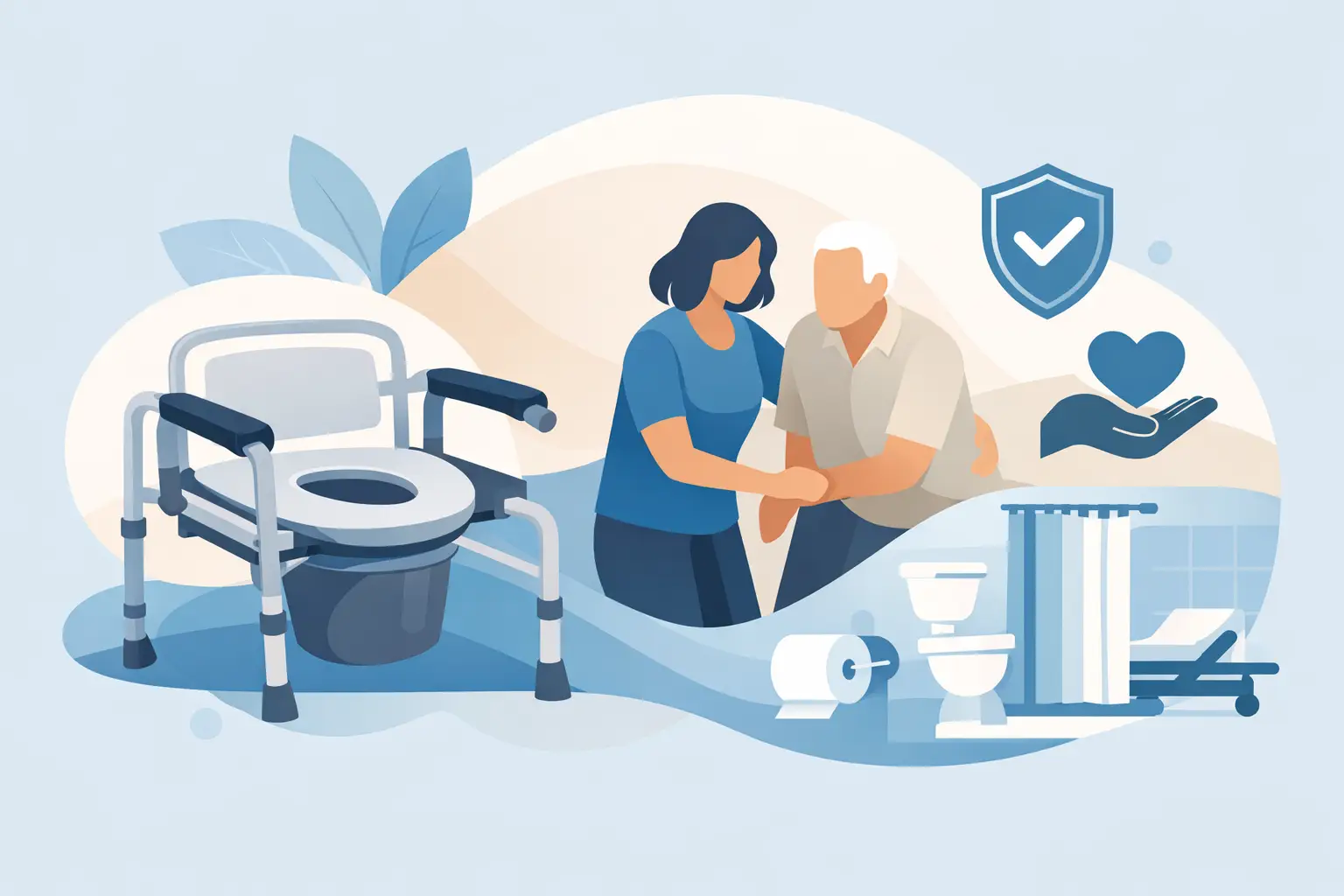
Drop Arm Commode Benefits That Matter
A standard bedside commode can solve one problem and create another if the user cannot safely step, pivot, or lift over fixed side rails. That is where drop arm commode benefits become clear. For many homecare patients, rehab users, and long-term care residents, the ability to lower one or both arms changes the transfer process, reduces caregiver strain, and supports safer toileting at the point of care.
This is not a niche feature. In the right care setting, it can be the difference between a manageable transfer and a high-risk one. The key is understanding who benefits, where the design helps most, and what trade-offs to consider before purchasing.
Why drop arm commode benefits matter in daily care
A drop arm commode is designed with side arms that release and swing down or out of the way. That simple change improves lateral access to the seat. Instead of asking a patient to stand fully, turn, and lower into place, caregivers may be able to support a side transfer from a bed, wheelchair, or transfer surface.
For users with reduced lower-body strength, poor balance, post-surgical precautions, or partial weight-bearing restrictions, that matters immediately. The transfer can be more direct and more controlled. In homecare, where space is often limited and one caregiver may be doing most of the work, easier access is not just a convenience. It is a safety feature.
In facility settings, the same logic applies. Staff are often managing multiple patients with varying mobility levels, and equipment that simplifies positioning can support both efficiency and injury prevention. A drop arm design does not replace proper transfer technique, but it can make the technique more workable.
Safer lateral transfers from bed or wheelchair
The most important advantage is transfer access. Fixed-arm commodes can block a sliding transfer, especially for users who move with a transfer board or need close side approach from a wheelchair. Lowering the arm creates an open path to the seat and helps reduce the need for awkward lifting.
This is especially useful for patients recovering from stroke, joint replacement, spinal injury, or other conditions that affect balance and controlled standing. It can also help users with generalized weakness who fatigue quickly during movement. When the path is clearer, the caregiver can focus on positioning and stability instead of working around the frame.
That said, the commode still needs to match the user’s transfer ability. A drop arm model helps most when the patient can complete a lateral or assisted transfer with appropriate support. If the patient is fully dependent, a mechanical lift or other transfer equipment may still be the safer choice.
Better support for wheelchair users
For wheelchair users, a drop arm commode often fits more naturally into established routines. Many transfers happen from the side, not from the front. When one or both arms lower, the wheelchair can often be positioned closer, and the user may have less distance to bridge.
That smaller gap can reduce shear, improve alignment, and support a more controlled move onto the seat. It may also help users maintain dignity and independence when they can participate more actively in the transfer.
Not every wheelchair setup is the same, so fit still matters. Seat height, wheel clearance, footrest position, and the overall footprint of the commode all affect whether the transfer works well in practice. For that reason, product selection should be based on the user’s actual transfer environment, not just a broad feature list.
Easier hygiene access for caregivers
Another of the practical drop arm commode benefits is improved caregiver access during toileting and hygiene tasks. With the side arm lowered, the caregiver may have a better working angle for clothing management, perineal care, and repositioning.
This can be valuable in bariatric care, limited-mobility care, and any situation where the user cannot easily shift weight or maintain position without assistance. Better side access can help the caregiver work more efficiently while reducing awkward body mechanics.
The value here is operational as much as clinical. When routine care tasks are easier to complete, consistency improves. That can support skin care, infection control practices, and patient comfort over time.
Reduced caregiver strain
Caregiver injury risk is a serious concern in both professional and family care environments. Fixed-arm equipment can force caregivers into reaching, twisting, or partial lifting during transfers. A drop arm commode can reduce some of that strain by creating a more accessible transfer path.
This does not mean the equipment eliminates risk. Training, patient assessment, and proper setup still matter. But when the design supports a cleaner transfer, the caregiver often spends less effort compensating for the limitations of the equipment.
In home settings, where one person may be providing care without additional staff support, that difference can be significant. For facilities, equipment choices that support safer staff body mechanics can also affect workflow and long-term injury exposure.
A more practical option after surgery or during rehab
Temporary mobility loss is one of the most common reasons to consider a drop arm commode. A patient may be able to bear some weight but not enough for repeated toilet transfers to a standard bathroom setup. Others may have movement restrictions after hip, knee, or spine procedures.
In those cases, bedside use or close-room placement can reduce urgency and travel distance while preserving safer access. The drop arm feature can support rehab progression by allowing the patient to use a transfer method that matches current ability rather than forcing a full stand-pivot before it is realistic.
This is where matching the product to the phase of recovery matters. Some users need a drop arm commode for a short post-acute window. Others may need it as a long-term solution because their mobility baseline is unlikely to improve. The purchasing decision should reflect that timeline.
When a drop arm commode may be the better choice
The best candidates are usually users who need side transfers, have limited standing tolerance, or require close caregiver assistance during toileting. That includes many wheelchair users, patients with unilateral weakness, users with neurologic conditions, and individuals with significant deconditioning.
It may also be the better option in settings where the bathroom is not immediately accessible or where nighttime toileting raises fall risk. If the user has to travel too far, turn in a tight space, or negotiate a raised threshold, bedside equipment may be the safer route.
Still, not every patient needs this design. If the user transfers independently, has good balance, and does not need side access, a standard commode may be sufficient. Drop arm models are most valuable when the transfer challenge is clear and recurring.
Trade-offs to consider before buying
The feature set is helpful, but there are trade-offs. Some drop arm commodes are heavier or bulkier than standard models. That can affect portability and storage, especially in smaller homes. Release mechanisms also vary, so ease of use is not identical across products.
Frame stability is another consideration. A well-built drop arm model should lock securely when the arms are raised, but buyers should still review weight capacity, frame materials, and overall construction. In bariatric or higher-acuity settings, those details are not optional.
Cleaning and maintenance matter too. More moving parts can mean more points to inspect over time. For institutional buyers, that affects durability review and replacement planning. For home users, it affects daily usability.
What to check before selecting a model
A good purchasing decision starts with the transfer method. Ask whether the user performs a stand-pivot, assisted pivot, lateral slide, or transfer board move. Then check seat height, width, arm operation, bucket access, and overall dimensions against the care space.
Weight capacity should match the user with an appropriate safety margin. Seat comfort and stability are also worth reviewing, especially if the commode will be used multiple times daily. If the user is also using a wheelchair, compare transfer heights carefully. A poor height match can make even a drop arm design harder to use.
For professional buyers, it is also useful to think beyond one patient episode. Standardizing commodes around common transfer needs may improve equipment utilization across units or care programs. For homecare purchasers, expert guidance can help narrow choices quickly and avoid ordering a model that solves one problem while creating another.
Drop arm commode benefits in real-world care planning
The strongest case for this equipment is simple: it helps align toileting access with actual mobility level. That is good clinical practice, and it is good operational practice. Safer transfers, better caregiver access, and a more realistic fit for wheelchair and rehab users can improve day-to-day care without adding unnecessary complexity.
When equipment decisions are tied to how care actually happens, outcomes tend to improve. If a patient’s biggest challenge is getting onto and off the seat safely, a drop arm commode deserves serious consideration. Choosing the right setup early can prevent rushed workarounds later, which is often where avoidable risk starts.
If you are sourcing for home use, rehab discharge, or facility inventory, the right commode is the one that fits the transfer, the caregiver, and the room the first time.