
CPAP Machines: How to Choose the Right Setup
A CPAP device that sits unused on a bedside table does not support treatment. For patients with obstructive sleep apnea, CPAP machines work only when the prescribed therapy is paired with a comfortable interface, dependable power, a clean airflow path, and a replenishment plan for wearable parts. For caregivers, clinicians, and purchasing teams, selecting the equipment is therefore more than choosing a machine category.
What CPAP Machines Do
Continuous positive airway pressure, commonly called CPAP, delivers a prescribed level of pressurized air through tubing and a mask. That pressure helps keep the upper airway open during sleep, reducing the breathing interruptions associated with obstructive sleep apnea.
A CPAP machine is not a general-purpose breathing device, and it should be selected and used according to a qualified clinician’s prescription and treatment plan. The prescribed pressure setting, interface type, and comfort features may all affect adherence. A machine with more features is not automatically the right choice if those features do not address the patient’s clinical needs, living situation, or ability to manage the equipment.
For home-based care, the goal is usually consistent nightly use with minimal disruption. In a long-term care, post-acute, or other institutional setting, the goal also includes clear patient identification, infection-control practices, supply continuity, and staff familiarity with the equipment.
Start With the Therapy Order and Care Setting
Before comparing device features, confirm what has been ordered. A standard fixed-pressure CPAP delivers one prescribed pressure. An auto-adjusting positive airway pressure device, often called APAP, adjusts pressure within a clinician-set range in response to detected breathing events. Bilevel devices deliver separate inspiratory and expiratory pressures and are prescribed for different clinical circumstances.
These categories are related but not interchangeable. A purchaser should not substitute one for another based only on availability or price. If the order, patient record, or discharge instructions are unclear, verify the required therapy type with the prescribing clinician or respiratory care team before purchasing.
The care setting changes what matters most. A patient who travels frequently may prioritize a compact unit, travel-appropriate power options, and a simple carrying case. A caregiver supporting an older adult at home may need an easy-to-read display, straightforward assembly, and humidification that is manageable despite reduced hand strength or vision. A facility may place greater weight on fleet consistency, replacement-part availability, cleaning workflow, and documentation.
It also helps to identify who will set up and maintain the device. A patient who is independent may be comfortable reviewing basic operating instructions and replacing water daily. A caregiver or staff member may need to handle mask fitting, supply ordering, and troubleshooting. Planning for the actual user prevents equipment from becoming difficult to operate after delivery.
Key Features to Compare in CPAP Machines
Pressure comfort and ramp settings
Many devices offer a ramp feature that begins therapy at a lower pressure and gradually increases to the prescribed setting as the patient falls asleep. This can improve comfort for some users, especially during the first weeks of treatment. Exhalation-relief features may also make breathing out against pressure feel easier.
Comfort features should support the prescribed therapy rather than replace proper fitting or clinical follow-up. If a patient repeatedly removes the mask, experiences persistent air hunger, or cannot tolerate therapy, the appropriate response is to contact the prescribing provider, not to independently change pressure settings.
Integrated humidification
Pressurized airflow can cause dry mouth, nasal dryness, or congestion. A heated humidifier may reduce these issues, particularly in dry climates, during winter, or when the patient has nasal sensitivity. Heated tubing can further limit condensation in the tube, sometimes called rainout.
Humidification adds maintenance requirements. The chamber should be emptied and dried as directed, filled with the water specified by the manufacturer, and inspected for wear. For patients or facilities that need the simplest possible routine, assess whether humidification is necessary and whether the person responsible can maintain it consistently.
Data and monitoring capabilities
Modern CPAP equipment may record usage hours, mask leak information, and therapy indicators. Depending on the device and care arrangement, data may be reviewed on the unit, through a compatible platform, or by a clinical provider. This information can help identify patterns such as frequent mask removal or excessive leak.
Data is useful, but it is not a replacement for patient assessment. A device may show acceptable use time while the patient still reports fatigue, skin irritation, dry mouth, or difficulty sleeping. Care teams should consider the patient’s experience alongside available therapy information.
Power and portability
Every setup needs a practical power plan. Confirm that the device is compatible with the available electrical service and that cords can be positioned without creating a trip hazard. For travel, verify airline, battery, and power-converter requirements in advance. Battery capacity varies based on pressure, humidifier use, heated tubing, and environmental conditions.
Facilities should also consider continuity planning during outages. A patient with a respiratory device should have clear instructions from the clinical team about what to do if power is unavailable. Do not assume that every CPAP user needs the same backup solution.
The Mask Often Determines Long-Term Success
The machine delivers pressure, but the mask is the part the patient feels all night. A well-selected mask supports an effective seal without excessive tightening. Too loose and air leaks can disturb sleep. Too tight and the patient may develop discomfort, pressure marks, or skin breakdown.
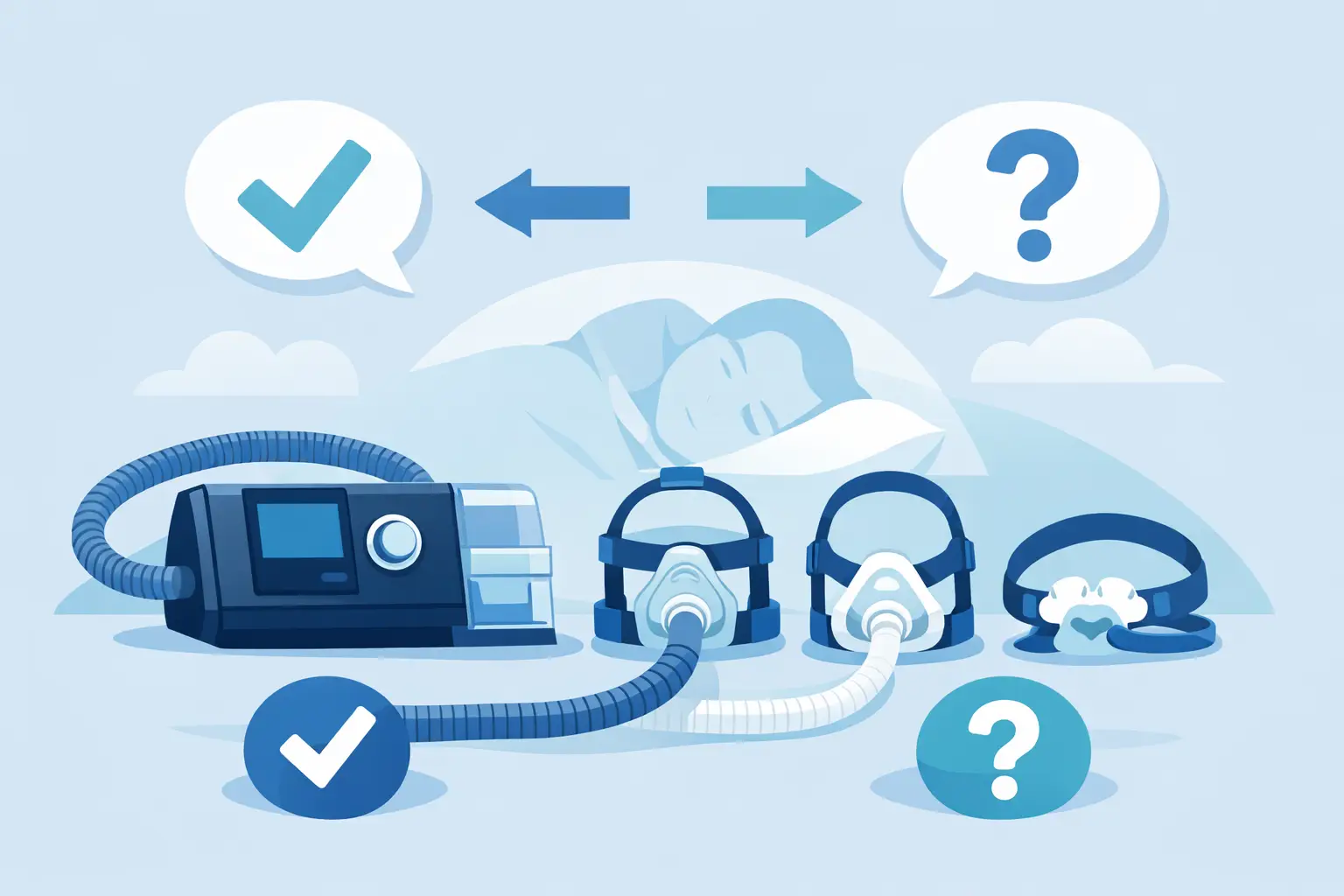
Nasal masks cover the nose and are common for patients who breathe comfortably through the nose. Nasal pillow masks use small cushions at the nostrils and can feel less bulky, though they are not ideal for every patient. Full-face masks cover the nose and mouth and may be more suitable for people who breathe through the mouth or have frequent nasal congestion.
There is no universal best mask. Facial structure, dentures, facial hair, sleeping position, claustrophobia, skin sensitivity, and hand dexterity all influence fit. For a patient with limited mobility or arthritis, choose a design with clips and headgear that the caregiver or patient can manage. For pediatric or bariatric care, use equipment designed for the individual’s size and clinical requirements rather than adapting an adult standard mask.
Mask leaks deserve prompt attention. Repositioning the cushion, checking headgear condition, replacing a worn cushion, or trying another interface may help. Persistent leaks can reduce comfort and interfere with effective therapy, so they should be reviewed with the care team or equipment specialist.
Plan for Replacement Supplies Before They Are Needed
CPAP therapy depends on consumable and wearable components. Filters, mask cushions, headgear, tubing, humidifier chambers, and water chambers wear at different rates based on use, cleaning practices, and manufacturer guidance. A cracked chamber, stretched headgear, or damaged tube can quickly turn a workable setup into a missed night of therapy.
For home care, establish a simple resupply routine and keep a reasonable backup of critical items when permitted by the care plan and coverage requirements. For organizations, standardize compatible accessories where clinically appropriate and maintain inventory visibility across locations. The lowest unit price may not be the lowest operational cost if an incompatible mask or delayed replacement interrupts treatment.
When ordering supplies, verify the device model, mask model, size, connector type, and any required heated-tube compatibility. Similar-looking parts are not always interchangeable. Keeping the original product information, order history, and patient-specific sizing details available can reduce errors when a replacement is needed quickly.
Cleaning and Daily Care Without Unnecessary Complexity
Follow the device and mask manufacturer’s instructions for cleaning, drying, and replacement. In general, this means regularly cleaning patient-contact components, inspecting the tubing and chamber, and keeping the device in a clean location with adequate airflow. The machine should sit on a stable surface away from curtains, bedding, heat sources, and areas where it can draw in dust or pet hair.
Avoid adding unapproved chemicals, fragrances, or cleaning methods to the equipment. Some third-party cleaning products and high-intensity sanitizing methods can damage materials or affect warranties. For shared-care environments, follow the applicable facility infection-control policy and manufacturer instructions, with patient-specific equipment handling clearly defined.
Water in the humidifier chamber should not be left standing for extended periods. Emptying and drying the chamber as instructed helps limit buildup and supports a predictable routine. If the patient notices unusual odor, visible damage, unexplained noise, or a change in performance, stop and assess the equipment according to the provider’s and manufacturer’s guidance.
When to Seek Additional Support
Early support can prevent a small comfort issue from becoming treatment abandonment. Contact the prescribing clinician, respiratory therapist, or qualified equipment support team when the patient has persistent intolerance, skin injury, recurring severe dryness, significant leaks, unexplained alarms, or questions about prescribed settings. New or worsening shortness of breath, chest pain, confusion, or other urgent symptoms require immediate medical attention.
For purchasers managing multiple care needs, equipment selection works best when it is connected to the full care environment: the bed setup, electrical access, caregiver capacity, replacement supply process, and clinical follow-up. DME Medical Supplies can help customers identify compatible respiratory equipment and replacement components when timely, informed sourcing is needed.
The right CPAP setup is the one that supports prescribed therapy night after night while fitting the patient’s abilities and the caregiver’s workflow. A careful match at the start can reduce preventable interruptions and help keep sleep apnea treatment practical over the long term.