
Choosing a Wheelchair Cushion for Pressure Relief
A seating problem rarely starts with the cushion alone. It usually shows up as a pattern – redness after transfers, frequent repositioning, sliding forward in the chair, complaints of hip or tailbone pain, or skin breakdown risk that rises as sitting time increases. When you are selecting a wheelchair cushion for pressure relief, the goal is not just added comfort. The goal is pressure management, postural support, and a seating surface that matches the user’s mobility, skin status, and care environment.
For clinicians, caregivers, and procurement teams, this is where product selection can become more technical than it first appears. A cushion that feels soft during a brief trial may not perform well across a full day of sitting. A high-end cushion may offer excellent immersion and envelopment but still fail if it is not appropriate for the user’s transfer style, positioning needs, or maintenance capacity. The right choice depends on clinical risk, functional use, and the practical realities of daily care.
What a wheelchair cushion for pressure relief needs to do
Pressure relief is only one part of the seating equation, but it is a critical one. People who use wheelchairs for extended periods may have limited sensation, impaired weight shifting, poor trunk control, or a history of pressure injuries. In these cases, a standard cushion may not provide enough protection over bony prominences such as the ischial tuberosities, sacrum, and coccyx.
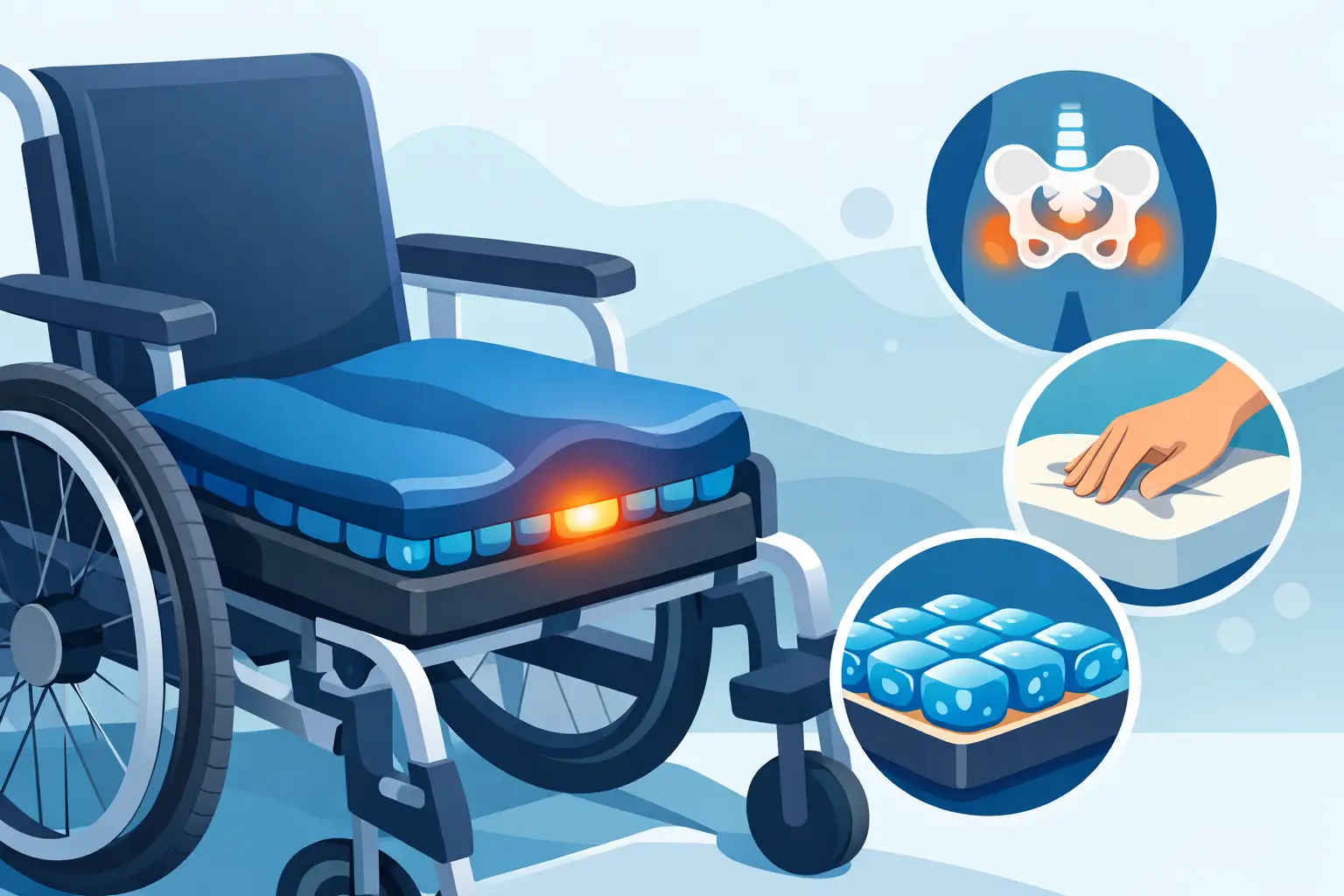
An effective wheelchair cushion for pressure relief should help redistribute load across a broader surface area, reduce peak pressure points, and support stable positioning. Stability matters because posture affects pressure. If a user leans heavily to one side, posteriorly tilts the pelvis, or slides into sacral sitting, pressure can concentrate quickly even on a premium cushion.
The best cushion also has to support daily function. A user who self-propels may need a different surface than someone who is transported full time. A homecare patient with dependable caregiver assistance may be able to use a more maintenance-intensive cushion than a facility resident with inconsistent repositioning tolerance. Matching performance to use case is what separates a clinically useful product from one that simply sounds advanced.
Start with risk level, not material alone
It is common to shop by material category first – foam, gel, air, or hybrid. That is understandable, but it is not the best starting point. Begin with the user’s pressure injury risk, sitting tolerance, skin integrity, and positioning needs.
For lower-risk users who need mild pressure redistribution and general comfort, high-density foam cushions may be appropriate. They are often lighter, simpler to maintain, and easier to manage across a range of care settings. They can work well for short-to-moderate sitting periods, especially when transfers are frequent and posture is reasonably stable.
For users with moderate to high skin breakdown risk, a more specialized cushion may be needed. Gel cushions can help with pressure distribution and may offer a more stable seated feel, though weight and heat retention can be trade-offs. Air cell cushions can provide excellent immersion and pressure redistribution for some users, but they require correct inflation and ongoing monitoring. Hybrid cushions combine materials to balance stability, protection, and ease of use.
The main point is this: material does not determine suitability by itself. A poorly matched air cushion is not automatically better than a well-matched foam or hybrid model. Clinical fit and daily management matter more than product category alone.
Posture, pelvic position, and pressure are connected
Pressure management cannot be separated from posture. If the pelvis is not supported well, the user may slide, lean, rotate, or collapse into asymmetrical sitting. That changes where weight is carried and can increase friction and shear.
This is one reason contoured cushions are often considered for users who need more than flat surface support. Contouring can help guide pelvic positioning, improve lower-extremity alignment, and reduce the tendency to drift into positions that increase pressure risk. For users with fixed deformities or significant asymmetry, standard contouring may still be insufficient, and more customized seating may be appropriate.
Seat width and depth also affect performance. A cushion that is too narrow can create edge loading and discomfort. One that is too wide may reduce stability and make transfers harder. If the depth is incorrect, the user may not be fully supported under the thighs or may experience pressure behind the knees. Proper wheelchair measurements are part of proper cushion selection.
Pressure relief in homecare versus facility use
The care setting changes what is practical. In homecare, ease of cleaning, transfer compatibility, and caregiver confidence often drive long-term success. A cushion can perform well on paper and still fail in the home if it is heavy, difficult to inspect, or too complicated to maintain correctly.
In long-term care and post-acute environments, standardization may matter more. Procurement teams often need products that can be deployed reliably across multiple residents, support infection control protocols, and hold up to repeated handling. At the same time, standardization has limits. Pressure injury prevention is highly individual, and seating surfaces should still be matched to the resident’s clinical profile whenever possible.
For bariatric users, pediatric users, and complex rehab cases, the selection process becomes even more specific. Weight capacity, growth considerations, positioning accessories, and compatibility with wheelchair base dimensions all need review before purchase.
Common trade-offs buyers should expect
There is no perfect cushion for every user, and most choices involve trade-offs. A highly immersive surface may improve pressure redistribution but feel less stable for transfers. A firmer cushion may support propulsion and positioning better but offer less protection for fragile skin. A lighter cushion may simplify transport but sacrifice some advanced features.
Maintenance is another common dividing line. Foam is often straightforward. Gel may be heavier and can shift over time depending on design. Air cushions can be clinically effective, but only when inflation is checked and maintained correctly. If the user or caregiver cannot realistically manage that task, performance may drop quickly.
Cover selection also deserves attention. The cover affects heat, moisture management, and shear reduction. A wipe-clean incontinence cover may be appropriate in one setting, while a more breathable stretch cover may be preferable in another. The wrong cover can limit the benefits of the cushion beneath it.
When reevaluation is necessary
A cushion should not be treated as a one-time decision. Seating needs change with weight fluctuation, decline in mobility, new wounds, post-surgical recovery, or changes in transfer method. If a user begins spending more time in the chair, develops redness, reports increased pain, or shows changes in posture, the cushion should be reassessed.
Loss of shape, bottoming out, damaged air cells, shifting gel, or worn covers are also signs that replacement may be needed. In institutional settings, regular inspection is especially important because wear may not be obvious during routine use. A cushion that looks intact can still lose its protective value over time.
Questions that lead to a better cushion choice
Before ordering, it helps to clarify a few practical points. How many hours per day will the person sit in the wheelchair? Can they perform independent weight shifts? Do they have a history of pressure injuries? Is pelvic positioning stable or compromised? Will the cushion be used on a manual wheelchair, transport chair, or power mobility base? Who will maintain it, clean it, and monitor its condition?
These questions matter because they connect product features to care reality. They also help reduce returns, delays, and mismatched purchases. For professional buyers, they support more consistent ordering standards. For caregivers and home users, they make conversations with a supplier or clinician much more productive.
Choosing with clinical goals in mind
The most effective wheelchair cushion selection process starts with the user’s risk profile and ends with day-to-day usability. Pressure redistribution, positioning, skin protection, transfer safety, maintenance, and wheelchair fit all need to work together. If one of those elements is overlooked, even a well-reviewed cushion may underperform.
For buyers managing multiple care environments, this is where expert-guided selection can save time and avoid preventable complications. DME Medical Supplies supports this process by helping customers compare options across therapeutic seating categories, functional needs, and care settings.
A good cushion should reduce risk without creating new problems. If the choice improves skin protection, supports posture, and still works for the people providing care every day, you are much closer to a seating solution that holds up where it matters most.