
Portable Oxygen Concentrator Accessories Guide
A portable oxygen concentrator is only as practical as the parts that keep it running where care actually happens – in the car, at appointments, during discharge transitions, and throughout daily life at home. That is why portable oxygen concentrator accessories matter so much. The right accessory setup can reduce interruptions, improve patient comfort, and help caregivers avoid preventable problems like low battery time, damaged tubing, or missed filters.
For procurement teams, clinicians, and home caregivers, accessory selection is not just about convenience. It affects uptime, patient compliance, transport readiness, and the total cost of ownership over time. Some users need a simple replacement cannula and extra battery. Others need a more complete support kit for travel, vehicle charging, carrying, and routine maintenance. The best choice depends on the patient, the care setting, and how often the unit leaves the home.
Which portable oxygen concentrator accessories matter most
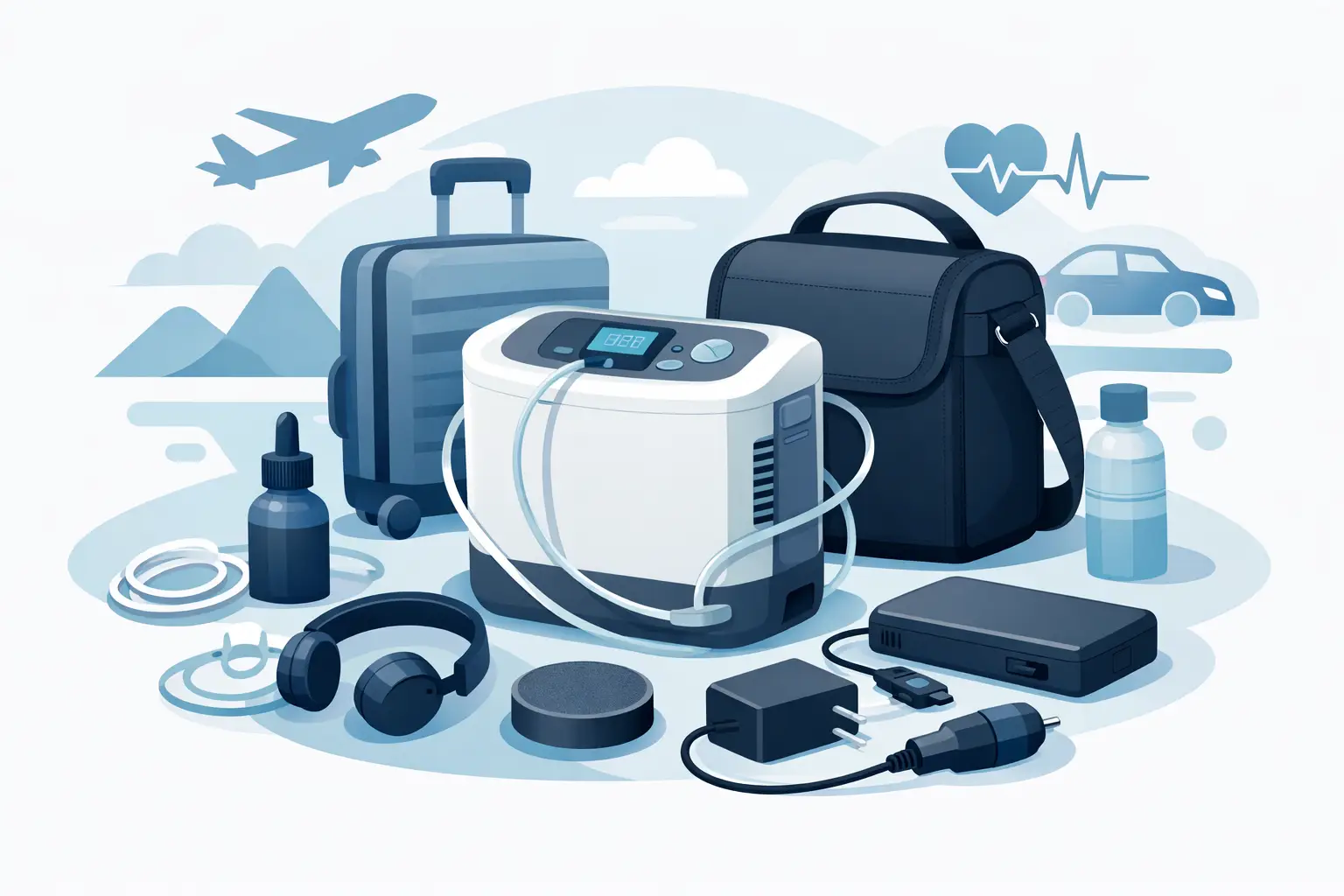
Most accessory decisions fall into four functional areas: power, patient interface, transport, and maintenance. Looking at accessories this way makes it easier to buy what supports real use instead of overbuying parts that sit on a shelf.
Power accessories are usually the first priority. Extra batteries, AC power supplies, DC car chargers, and external battery chargers can make the difference between continuous use and an unexpected disruption. A patient who spends long periods away from home may need multiple batteries and a dependable charging routine. In a facility discharge workflow, sending a patient home with only the base configuration can create avoidable calls and urgent replacement needs.
Patient interface accessories include cannulas, extension tubing where appropriate, and in some cases humidification-related components if the manufacturer supports them. These items directly affect comfort and oxygen delivery. Fit matters. So does compatibility. Not every cannula or tubing setup performs the same way with every device, especially when pulse dose settings are involved.
Transport accessories are often underestimated until the patient starts using the unit outside a controlled setting. Carry bags, shoulder straps, rolling carts, and protective cases help patients move with less strain and lower the risk of drops or blocked vents. For older adults, bariatric patients, or users with limited upper-body strength, the way a concentrator is carried can affect whether they use it consistently.
Maintenance accessories include replacement intake filters, outlet filters if required, and other manufacturer-specified consumables. These are not optional add-ons. They are part of keeping the concentrator functioning correctly. A clogged or overdue filter can affect performance, lead to alarms, and shorten equipment life.
Power accessories for portable oxygen concentrator use
Battery planning should match actual daily routine, not ideal conditions listed on packaging. Runtime varies by setting, breath rate, device model, and battery age. A battery that lasts long enough for one patient may not cover another patient’s schedule, particularly during frequent travel, long clinic days, or extended periods outside the home.
For that reason, extra batteries are usually the most useful portable oxygen concentrator accessories. They offer redundancy and flexibility, especially when caregivers are supporting appointments, family travel, or emergency planning. In homecare, an additional battery can reduce stress during power outages or times when the patient is moving room to room and not plugged into AC power.
AC and DC charging accessories matter for the same reason. A home-only charger may be fine for limited use, but many patients benefit from a vehicle charger that supports charging during transport. This is especially relevant for rural patients, VA-related transport needs, and caregivers managing frequent physician visits. An external charger can also help rotate battery inventory more efficiently when more than one battery is in use.
The main trade-off is cost versus continuity. If the unit is rarely used away from a wall outlet, a backup battery may be enough. If mobility is part of routine care, a fuller charging kit is usually justified.
Comfort and delivery accessories
A portable oxygen concentrator can be technically functional and still hard for a patient to tolerate. That is often where accessory selection becomes important. Nasal cannulas vary in softness, curvature, length, and fit. Choosing the right one can reduce skin irritation and improve day-to-day acceptance.
Tubing decisions should be made carefully. Longer tubing may provide more flexibility in a room, but it can also create trip hazards or affect practical mobility. In active home settings, shorter and better-managed tubing often supports safer use. In clinical or facility-guided transitions, staff should confirm what the manufacturer allows for the specific unit and prescription.
Filter replacements are another comfort issue, even if they are usually thought of as maintenance parts. A clean filter helps the device breathe properly, which supports consistent operation and can reduce nuisance alarms that frustrate patients. When alarms happen repeatedly, patients may become less confident using the equipment, even when the fix is straightforward.
Carrying and transport accessories
Portability is one of the main reasons these devices are prescribed, but portability on paper is not always portability in practice. The weight of the unit, the patient’s mobility level, and the duration of use all shape what accessory setup works best.
A standard carry bag may be enough for a strong, independent user who only leaves home occasionally. But a patient with balance limitations, arthritis, or reduced endurance may need a better-supported strap system or a rolling option. These details affect safety. If carrying the concentrator pulls on the shoulder, interferes with a walker, or causes fatigue, the patient may avoid using it outside the home.
Protective cases and travel covers can also help preserve equipment condition. That is especially relevant in multi-user environments, medical transport, or busy household settings where the concentrator may be moved often. The goal is not to add bulk. It is to protect vents, cords, and controls without making the device harder to access.
Compatibility is where mistakes happen
The most common issue with portable oxygen concentrator accessories is not quality. It is mismatch. Batteries, power supplies, filters, and carrying systems are often device-specific. Even accessories that look interchangeable may not perform the same way across brands or models.
That is why model verification matters before ordering replacement parts. Buyers should confirm the exact device name, battery type, and manufacturer requirements. This is especially important for institutional purchasers managing multiple oxygen devices across different patient populations. A stocking mistake can delay care and create unnecessary returns.
For caregivers and home users, the safest approach is to replace like with like unless a compatible alternative has been clearly identified for that model. If there is uncertainty, expert guidance is worth using. DME Medical Supplies supports customers who need help identifying parts, which can save time when labels are worn or the original packaging is gone.
How to choose accessories by care setting
In homecare, the best accessory package usually supports daily reliability. That often means one or two extra batteries, a charging solution that fits the patient’s travel pattern, replacement filters, and comfort-focused cannula supplies. Simplicity matters because the patient or caregiver is handling most of the setup.
In long-term care or post-acute discharge planning, standardization matters more. Teams often benefit from creating a small approved accessory set by device model so staff can reorder quickly and avoid confusion. Extra power accessories, replacement filters, and transport aids are usually the most operationally useful categories.
For government and institutional buyers, the right approach depends on deployment needs and replacement cycles. Higher upfront accessory investment may reduce urgent resupply requests and service interruptions later. That is particularly true when equipment is used across large service areas or where response times matter.
When a replacement is overdue
Accessories are easy to postpone because the concentrator itself gets most of the attention. Still, worn accessories often create the first signs of trouble. Frayed cords, shorter battery life, damaged bags, stretched straps, and visibly dirty or degraded filters all deserve review.
Patients may not report these issues clearly. They may simply say the unit is harder to manage, does not last as long, or alarms more often. In many cases, the device does not need replacement – the support components do. A quick accessory check can solve what looks like a larger equipment problem.
That is also why keeping basic replacements on hand is practical. Downtime in oxygen therapy is not a minor inconvenience. It can disrupt appointments, mobility, and confidence in the care plan.
Choosing portable oxygen concentrator accessories well comes down to one question: what does this patient or program need the device to do, every day, without fail? Start there, match the accessories to real use, and the concentrator becomes easier to manage, safer to operate, and more reliable when it matters most.