
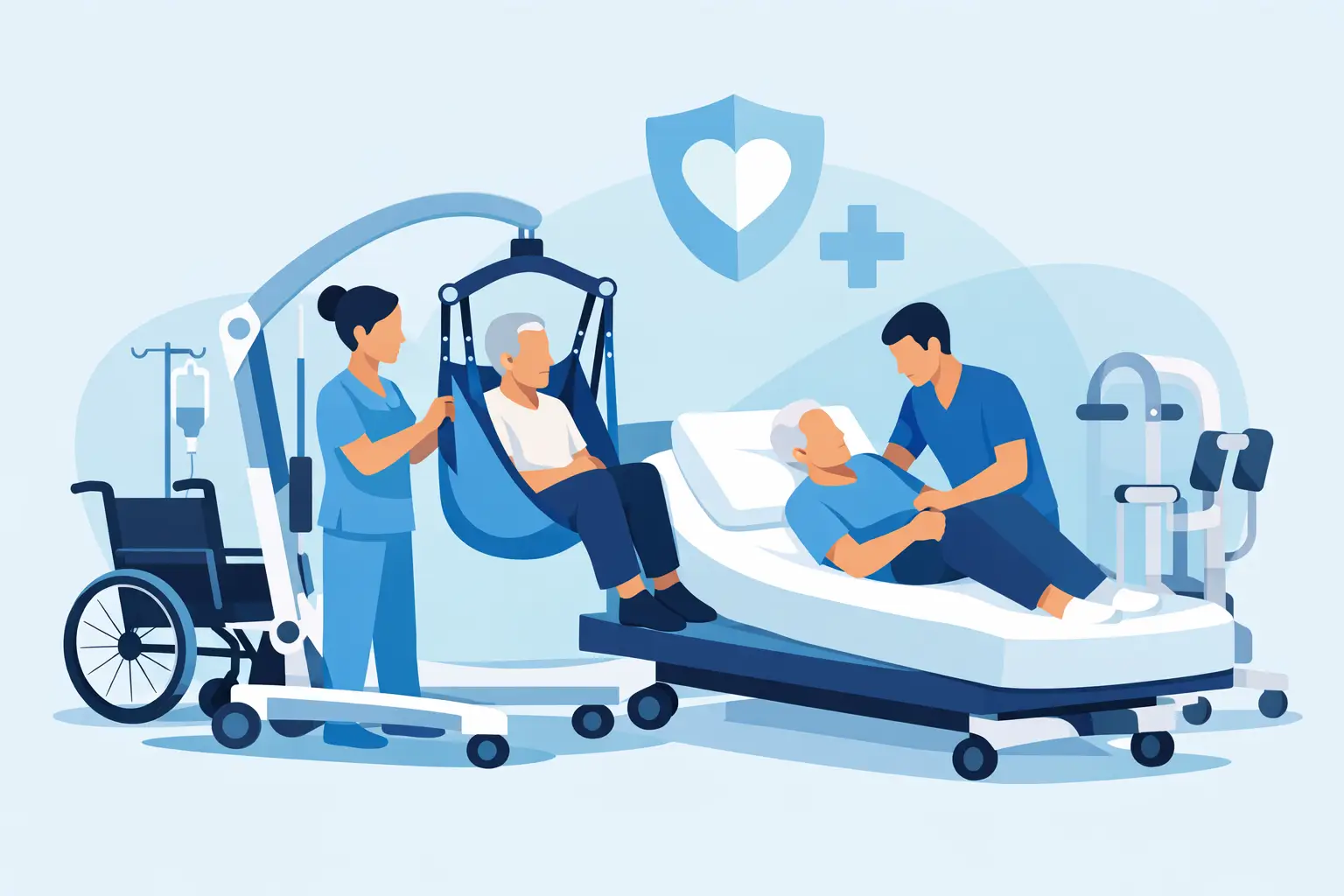
Patient Transfer Equipment Guide for Safer Care
A transfer that takes only a few seconds can create lasting consequences when the equipment, technique, or staffing level is wrong. Falls, skin injuries, caregiver back strain, and equipment damage often occur during routine moves between a bed, wheelchair, toilet, shower chair, or vehicle. This patient transfer equipment guide helps care teams and family caregivers match equipment to the patient’s abilities, the environment, and the demands of the task.
The right solution is not always the largest or most complex device. A patient who can bear weight and follow directions may need a standing aid, while a patient with little trunk control may require a full-body lift and correctly sized sling. A careful assessment before purchasing helps protect continuity of care and prevents costly equipment that does not fit the real transfer routine.
Start With the Transfer, Not the Product
Patient transfer equipment should be selected based on the specific movement being performed. “Transfer” can mean repositioning a patient in bed, moving from bed to wheelchair, assisting a partial stand, helping with toileting, or moving someone over a short seated distance. These tasks place different demands on the patient and caregiver.
Start by documenting where the patient begins and ends the move, whether they can bear weight through one or both legs, and how much assistance they require. Consider their upper-body strength, sitting balance, cognition, pain level, range of motion, skin condition, and ability to follow cues. A patient’s status can also change over time. Equipment appropriate during post-acute recovery may no longer be safe as weakness, fatigue, or a progressive condition increases.
The care environment matters just as much. Measure doorways, hallways, turning space near the bed, bathroom clearances, threshold transitions, and the available storage area. In a facility, equipment may need to serve multiple rooms and users. In a home, a lift that cannot turn into the bathroom or fit beneath a bed frame will not solve the caregiver’s problem.
Core Types of Patient Transfer Equipment
Gait Belts and Transfer Belts
A gait belt provides a secure handhold when assisting a patient who can stand, bear weight, and participate in the transfer. It is commonly used for guided walking, sit-to-stand assistance, and short pivot transfers. It is not a lifting device and should not be used to pull a patient upright when they cannot support themselves.
Choose a belt with an appropriate length, durable buckle, and material suitable for cleaning requirements. For patients with abdominal wounds, feeding tubes, fragile skin, ostomies, or significant pain, a conventional gait belt may be unsuitable. Clinical guidance should determine whether another method is needed.
Transfer Boards and Slide Boards
Transfer boards bridge the gap between two seated surfaces, such as a wheelchair and bed, wheelchair and commode, or wheelchair and vehicle seat. They are best suited to patients with adequate sitting balance and enough upper-body function to participate in a lateral transfer.
A board reduces the distance a patient must lift or pivot, but it does not eliminate the need for safe technique. Surface height, board length, clothing friction, wheelchair setup, and caregiver positioning all affect performance. If the patient cannot maintain a stable seated position or has severe skin sensitivity, a board may create more risk than benefit.
Sit-to-Stand Lifts
Sit-to-stand lifts, also called standing or stand-assist lifts, support patients who can bear some weight through their legs and have sufficient strength and control to participate in rising. They can be useful for transfers to a toilet, wheelchair, or bed and may encourage functional participation when clinically appropriate.
These lifts are not designed for a fully dependent patient. The patient must be able to hold the device as directed, tolerate standing, and maintain enough knee and trunk control for the transfer. Selecting this equipment for a patient who lacks those abilities can lead to a fall, knee injury, or loss of balance.
Full-Body Patient Lifts
A full-body lift supports patients who are non-weight-bearing, fully dependent, unable to stand safely, or unable to assist reliably because of weakness, neurological impairment, cognitive changes, or severe pain. Manual hydraulic and powered models are available, along with mobile floor lifts, ceiling lift systems, and compact designs for home use.
Powered lifts can reduce physical demands on caregivers, particularly when transfers are frequent or the patient has a higher body weight. Ceiling lifts preserve floor space and may improve coverage in regularly used areas, but installation requirements and room layout must be evaluated. Mobile lifts offer flexibility, although their base legs require clearance beneath beds, chairs, and commodes.
Slings, Repositioning Sheets, and Turning Aids
The sling is part of the lift system, not an accessory to choose later. Sling design affects patient comfort, head support, hygiene access, positioning, and safety. Common options include universal, full-body, divided-leg, toileting, hammock, hygiene, and bariatric styles. A sling must be compatible with the lift’s attachment system and selected according to the manufacturer’s instructions.
Repositioning sheets, glide sheets, and turning aids help reduce friction during boosts, lateral moves, and bed repositioning. They are especially useful when preventing shear and protecting caregiver backs are priorities. These products do not replace a transfer lift when a patient needs full support off the mattress.
How to Match Capacity, Fit, and Configuration
Weight capacity is a non-negotiable starting point. The rated capacity must exceed the patient’s current weight, including clothing, support surfaces, and any applicable accessories. Never assume a standard lift or sling accommodates a bariatric patient. Bariatric transfer equipment may require a wider base, reinforced sling, larger spreader bar, and adequate turning space throughout the care setting.
Fit matters beyond weight. A sling that is too small can cause pressure and poor positioning. One that is too large may allow the patient to slide or sit in an unsafe posture. Measure according to the product guidance and assess torso width, thigh support, head control, and the patient’s transfer needs. For patients with contractures, amputations, edema, or complex seating needs, a more specialized configuration may be appropriate.
Also verify compatibility across the complete system. Lift brands and sling attachment styles are not automatically interchangeable. Using an incompatible sling can create a serious safety risk, even if the loops appear to fit. When replacing a worn sling or adding another size, confirm the lift model, attachment type, capacity, and intended application before ordering.
Build the Process Around Safe Use
Even high-quality equipment cannot compensate for untrained use. Facilities should establish transfer assessments, equipment inspection procedures, staff competency training, and clear documentation of the patient’s current transfer status. Home caregivers benefit from hands-on instruction before using a lift independently, especially when the patient is unable to assist.
Before each transfer, inspect straps, stitching, clips, hooks, casters, hand controls, batteries, and spreader bars. Check that the sling is correctly positioned and that the wheelchair, bed, or commode is stable. Lock wheelchair brakes for transfers, but follow the lift manufacturer’s instructions regarding lift caster brakes. Some mobile lift designs are intended to move freely as the patient is raised rather than remain locked in place.
Plan the route before lifting. Remove footrests when appropriate, move obstacles, adjust bed height, and make sure the destination surface is ready. Never leave a patient suspended in a lift, and do not rush because the equipment is available. The safest transfer is calm, controlled, and performed by the number of trained caregivers specified in the care plan.
Procurement Questions That Prevent Delays
For facilities, the decision extends beyond a single patient. Consider battery charging needs, fleet storage, cleaning protocols, replacement sling availability, maintenance support, and expected daily use. A lower initial price can become expensive if the lift is difficult to service, unavailable when needed, or unable to support the patient population.
For home-based care, prioritize the equipment’s footprint, ease of operation, bed clearance, bathroom access, and caregiver ability. A product may have the correct capacity but still be impractical in a tight bedroom or narrow bathroom. Accurate measurements and a clear description of the care routine make product selection more efficient.
DME Medical Supplies can help buyers identify equipment categories and configurations that align with patient needs, care setting requirements, and operational timelines. When speaking with an equipment specialist, have the patient’s weight, transfer ability, bed and doorway measurements, and current care concerns available.
The best time to solve a transfer challenge is before the next rushed move between the bed and chair. A well-matched device, properly fitted sling, and trained caregiver team create a safer routine that patients can rely on every day.