
How to Choose Cane Height for Safer Walking
A cane that is even slightly too tall or too short can change the way a person walks. The result may be a sore shoulder, a bent posture, reduced balance, or less confidence when moving through the home or facility. Knowing how to choose cane height is a basic but meaningful part of safe mobility support, especially after surgery, during recovery, or when weakness affects one side of the body.
A properly fitted cane should provide support without forcing the user to reach, lean, shrug the shoulder, or bend forward. Most adjustable canes make fitting straightforward, but the measurement must be taken in the right position and checked during actual walking.
Why Cane Height Affects Safety and Comfort
A cane works by widening the user’s base of support and helping transfer some weight away from a painful, weak, or injured leg. To do that effectively, the handle needs to meet the hand at a natural height. When it does not, the cane can become a source of strain rather than a useful mobility aid.
A cane that is too high may cause the user to lift the shoulder or keep the elbow too straight. This can create tension in the neck, shoulder, wrist, and hand. It may also encourage the user to hold the cane too far from the body, reducing stability.
A cane that is too low can lead to forward bending and excessive pressure through the back and wrist. The user may feel as though they are reaching down for the handle with every step. This position can be particularly difficult for older adults, people with limited trunk control, or anyone recovering from hip, knee, or back surgery.
Correct height supports upright posture and allows the user to place the cane firmly on the floor before shifting weight. It is a small adjustment with a direct effect on daily safety.
How to Choose Cane Height Using the Wrist-Crease Method
The standard fitting method works well for most adults using a single-point or quad cane. The person should wear the shoes they normally use for walking, because footwear changes standing height and can alter the final setting.
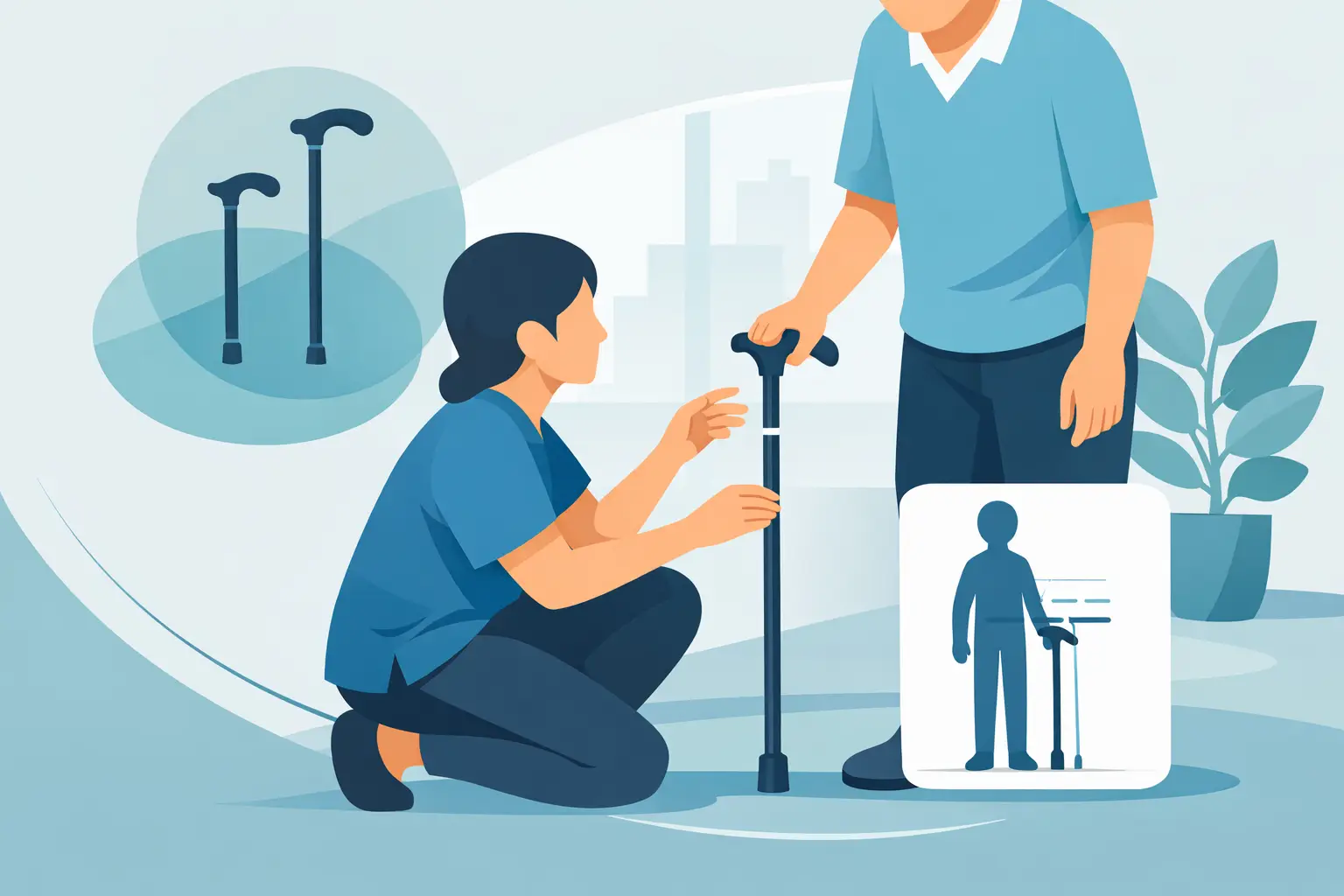
Have the user stand upright on a level surface with their arms relaxed naturally at their sides. The cane should be placed beside the stronger leg, with its tip resting flat on the floor. Adjust the cane handle until it reaches the crease on the inside of the wrist, where the hand meets the forearm.
When the user holds the handle, the elbow should bend slightly, generally about 15 to 30 degrees. This small bend allows the arm to absorb weight comfortably while keeping the shoulder relaxed. The user should not need to raise the shoulder, lock the elbow, or lean to reach the grip.
For a quick starting estimate, cane height is often close to one-half of the user’s height in inches. For example, a person who is 66 inches tall may begin with a cane near 33 inches. This is only an estimate. The wrist-crease measurement and a walking check are more reliable than a height formula alone.
Check the Fit While Walking
A standing measurement is the first step, not the final decision. Once the cane is adjusted, observe a short walk on a clear, level surface. The user should be able to keep their head up, shoulders level, and trunk reasonably upright.
For most one-sided weakness or pain, the cane is held in the hand opposite the affected leg. The cane and the affected leg move forward together, followed by the stronger leg. Using the cane on the opposite side gives the body a broader, more stable support pattern and can reduce the load on the painful side.
During the walking check, look for signs that the height needs refinement. Reaching down toward the handle, leaning heavily over the cane, shoulder hiking, or a cane tip that lands too far ahead are all reasons to reassess the setting. One adjustment hole can make a noticeable difference.
Fit Considerations for Different Cane Types
The same basic wrist-crease method applies to most canes, but the design and intended use still matter. A standard single-point cane is typically used for mild balance concerns, limited endurance, or temporary support. It is lighter and easier to maneuver on stairs and in narrow spaces, but it provides less contact with the floor than a wider-base option.
A quad cane has four feet at the base and can stand independently on level surfaces. It may be appropriate when a person needs more stability or cannot safely pick up and set down a standard cane with each step. The top of the handle should still meet the wrist crease, but facility staff and caregivers should confirm that all four feet rest flat. A quad cane that rocks because of uneven contact is not providing its intended benefit.
Offset-handle canes place the user’s weight more directly over the shaft and are often selected for people who need regular weight-bearing support. They should be fitted carefully because the user may rely on them more heavily than on a basic curved-handle cane. Ergonomic grips can reduce hand discomfort for some users, although a contoured grip must match the user’s hand size and preferred hand orientation.
For bariatric users, people with significant weakness, or individuals whose balance changes frequently, cane selection should not be based on height alone. Weight capacity, base design, grip comfort, gait pattern, and the ability to manage the device in the home or care environment all need review. In some cases, a walker may offer a safer level of support than a cane.
Common Fitting Mistakes to Avoid
Do not set cane height while the user is seated. The final measurement must reflect the person’s standing posture and usual footwear. A cane adjusted in slippers, socks, or barefoot may be too short once the user wears walking shoes.
Avoid adjusting a cane only by visual guesswork. A cane may look close to the right height but still leave the elbow locked or the shoulder elevated. Use the wrist crease and elbow bend as practical checkpoints.
Do not overlook the cane tip. A worn, cracked, smooth, or loose tip can reduce traction, even when the cane height is correct. The rubber tip should make full contact with the floor and be replaced before the tread becomes excessively worn. For outdoor use, consider the surface conditions the user encounters, including wet pavement, thresholds, uneven walkways, and carpet transitions.
Also verify that the push-button adjustment is fully engaged in a height hole and that the shaft does not wobble. For institutional settings, routine inspection of mobility aids can help prevent equipment-related falls and reduce unplanned replacement needs.
When a Clinical Assessment Is Needed
Basic cane fitting is appropriate for many routine situations, but some patients need a more detailed mobility evaluation. A physical therapist, occupational therapist, or other qualified clinician should assess cane use when there has been a recent fall, a new stroke or neurologic diagnosis, severe pain, major weight-bearing restrictions, significant cognitive impairment, or difficulty following a safe gait sequence.
Professional assessment is also valuable when a user has tried a cane but still feels unstable. The issue may not be the height. The person may need a different handle, a broader base, a walker, a gait belt during transfers, or changes to the environment such as improved lighting and removal of loose rugs.
For homecare teams and long-term care facilities, documenting the selected cane style, height setting, condition of the tip, and recommended walking pattern supports continuity across shifts and care transitions. For caregivers, a simple routine check before use can prevent a loose or damaged cane from becoming an avoidable hazard.
A Practical Final Check Before Daily Use
Before relying on a cane for regular mobility, confirm that the user can stand upright with the handle at wrist-crease height, hold it with a relaxed shoulder and slight elbow bend, and walk without reaching or leaning. Confirm the cane is used on the side recommended for the person’s condition, the adjustment button is secure, and the tip has good floor contact.
The right cane height should feel supportive, not demanding. When a user can move with a more natural posture and steady rhythm, the cane is doing what it was selected to do: provide dependable support for safer everyday movement.