
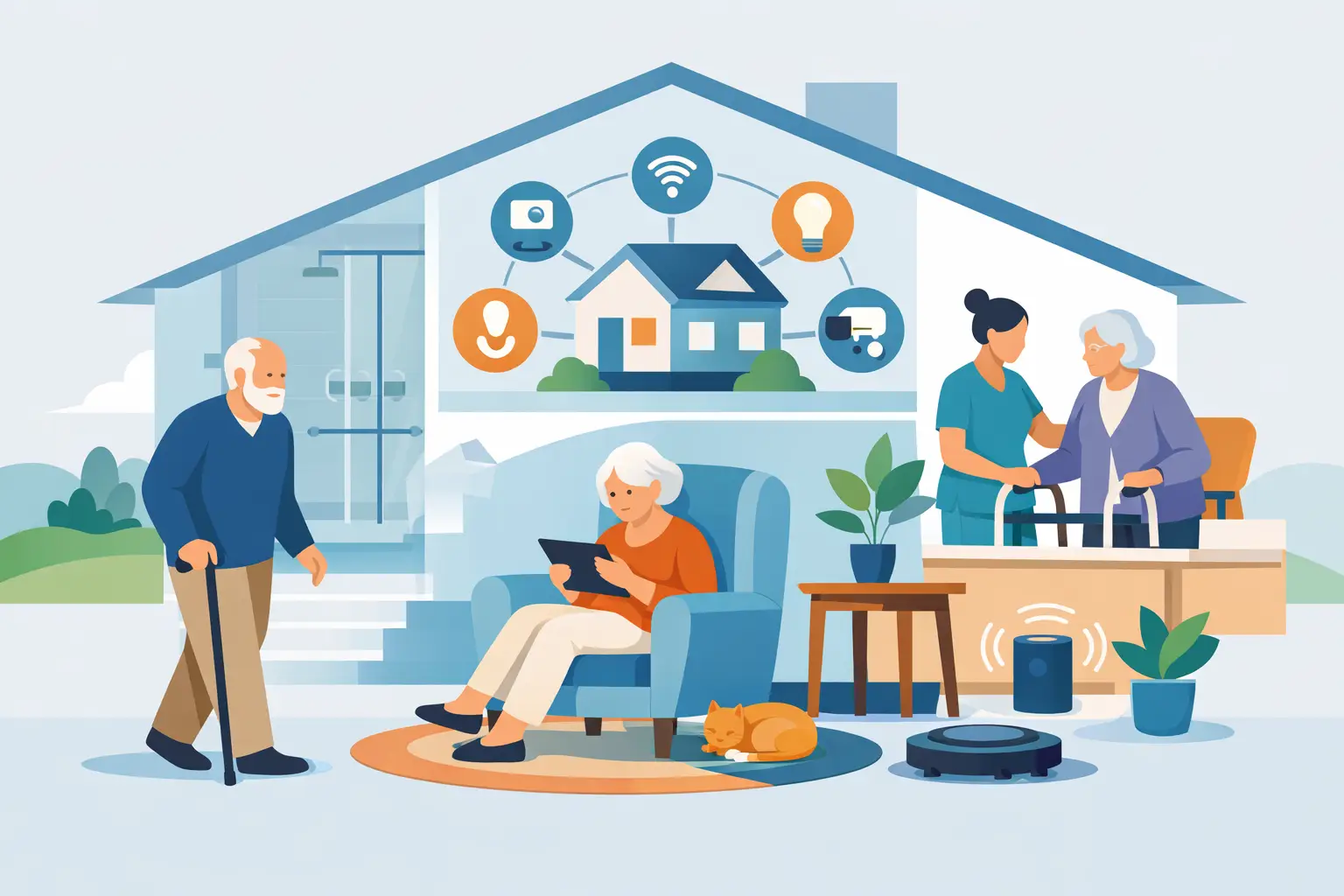
Aging in Place Trends Reshaping Home Care
A hospital discharge can turn a familiar home into a care environment overnight. A bedroom may need space for a hospital bed, a bathroom may need immediate fall-prevention support, and a family caregiver may suddenly be managing transfers, medication routines, and mobility concerns. Aging in place trends are changing how providers, caregivers, and procurement teams prepare for that moment: with earlier planning, more adaptable equipment, and a stronger focus on care continuity at home.
For healthcare organizations and home-based care teams, aging in place is not simply a preference for remaining at home. It is an operational care model. It requires the right equipment, clear clinical direction, dependable delivery, and the ability to adjust support as a patient’s condition, strength, or caregiver capacity changes.
Aging in Place Trends Driving Equipment Decisions
The most significant shift is from reactive purchasing to proactive home-readiness planning. Rather than waiting for a fall, a failed transfer, or an urgent discharge order, care teams are assessing functional needs earlier. This helps prevent avoidable delays while giving patients time to become comfortable with new equipment.
Mobility and fall prevention remain central. Grab bars, shower chairs, transfer benches, raised toilet seats, bedside commodes, walkers, and rollators are no longer viewed as isolated products. They are part of a coordinated approach to safer movement through the home. Product selection must account for the layout of the residence, the patient’s weight and balance, hand strength, cognitive status, and whether a caregiver is available to assist.
Another major trend is greater demand for equipment that can adapt over time. A patient recovering from surgery may initially need a walker and bath safety equipment, while a person with progressing mobility limitations may require a wheelchair, patient lift, pressure-management mattress, or adjustable bed. Planning around likely changes can reduce repeated disruptions and help organizations standardize appropriate options across their care populations.
Home care also increasingly includes clinically complex needs. Respiratory equipment, therapeutic support surfaces, enteral support accessories, bariatric equipment, pediatric rehab products, and patient-room furnishings may all be necessary outside a facility setting. The home may not look like a care unit, but the need for safe, compatible, reliable equipment is just as real.
The Home Is Becoming a Distributed Care Setting
Aging in place depends on a practical truth: the home must support the care plan. That places new responsibility on discharge planners, clinicians, home health agencies, durable medical equipment providers, and family caregivers to communicate before equipment arrives.
A proper home assessment considers more than whether an item will fit through the front door. Teams need to understand the path from vehicle to bedroom, doorway widths, floor surfaces, turning radius, bathroom layout, available electrical access, and storage space for supplies. For powered equipment, charging access and emergency planning matter. For beds, lifts, and support surfaces, the floor area and caregiver working space matter just as much.
The following factors should be addressed before selecting higher-impact equipment:
- The patient’s current transfer ability, balance, endurance, weight, and range of motion
- The care tasks expected each day, including toileting, bathing, repositioning, and respiratory support
- The number of caregivers available and their ability to safely provide assistance
- The physical layout of the home, including stairs, narrow halls, uneven flooring, and bathroom access
- The expected duration of need and the possibility that care requirements will increase
This assessment does not replace clinical judgment. It gives the clinical recommendation a workable setting. A transfer device that is appropriate in principle may be ineffective if there is no room for it beside the bed. A shower chair may improve safety, but not if the patient cannot safely step over a tub wall without a transfer bench or caregiver support.
Bathroom safety remains a high-priority category
Bathrooms create a concentrated set of risks: wet surfaces, tight turning space, low toilet height, and frequent transfers. As a result, bath safety equipment remains one of the most practical entry points for aging in place planning. The right combination may include a shower chair or tub transfer bench, hand-held shower accessories, grab bars, a raised toilet seat, or a commode placed close to the bed when overnight mobility is limited.
The trade-off is that convenience should never override stability. Equipment must be selected for the user’s body size, transfer pattern, and home environment. A lightweight solution may be easy to move, for example, but may not provide the support needed for a patient with significant balance limitations. Weight capacity, non-slip features, armrests, and adjustability are functional requirements, not product details to overlook.
Caregiver Capacity Is Shaping Product Selection
Family caregivers provide a substantial amount of daily support, but they are not always trained or physically able to perform demanding transfers. This is driving increased attention to equipment that protects both the patient and the caregiver.
Patient lifts, transfer aids, gait belts, slide sheets, adjustable beds, and properly matched wheelchairs can reduce unsafe manual handling. However, equipment alone does not solve a transfer problem. The caregiver needs instruction, the device needs to fit the space, and the care plan must specify when assistance is required. A lift that sits unused because no one is confident operating it does not improve safety.
For agencies and facilities supporting patients after discharge, standardizing equipment pathways can help. A basic mobility pathway, a bathroom safety pathway, and a higher-acuity transfer pathway give staff a starting point while leaving room for individualized clinical decisions. This approach can also simplify sourcing during urgent transitions of care.
There is an important balance to maintain. Over-equipping a home can create clutter and confusion, while under-equipping it can expose patients and caregivers to preventable injury. The goal is not to recreate an institution in the home. It is to provide the level of support needed for safe, dignified daily living.
Connected Care Adds Visibility, Not a Substitute for Support
Technology is also influencing aging in place trends. Remote patient monitoring, medication reminders, wearable alerts, telehealth visits, and connected vital-sign devices can give care teams more visibility between in-person visits. For patients with chronic respiratory conditions, heart failure, diabetes, or limited mobility, earlier awareness of changes may support faster intervention.
Still, connected care works best when it fits the patient and caregiver. Reliable internet access, comfort with technology, hearing or vision limitations, privacy requirements, and the ability to respond to alerts all affect whether a solution is useful. A device that creates frequent non-actionable alerts may increase burden rather than improve care.
The equipment foundation remains physical and practical. A remote visit cannot correct a poorly fitted wheelchair, replace a stable shower transfer setup, or reposition a patient at risk for pressure injury. Technology can support communication and monitoring, but it should be integrated with the equipment, training, and hands-on services the patient actually needs.
Procurement Priorities Are Shifting Toward Speed and Continuity
For institutional buyers, the aging-in-place market increases pressure to source across multiple categories without sacrificing product suitability. A discharge may require a bed, mattress, commode, mobility aid, and personal care supplies at the same time. Home health providers may need recurring access to replacement parts, respiratory accessories, or mobility products for a changing patient census.
This makes supplier responsiveness a patient-care issue. Fast fulfillment is valuable, but accuracy is equally important. Incorrect sizing, incompatible accessories, missing components, or unclear setup information can delay care and trigger avoidable returns. Procurement teams benefit from suppliers that can help identify appropriate product categories, confirm specifications, and support troubleshooting when equipment needs change.
DME Medical Supplies supports this need by bringing broad homecare, rehabilitation, patient-room, and safety equipment categories into one purchasing resource, with expert assistance available for product questions. For care organizations, fewer sourcing gaps can mean fewer delays during an already time-sensitive transition.
What to Plan for Next
The strongest aging-in-place programs treat equipment as part of an ongoing care process rather than a one-time order. Reassess after a hospitalization, fall, new diagnosis, medication change, decline in endurance, or change in caregiver availability. These events often signal that the current home setup no longer matches the patient’s needs.
Start with the tasks that create the most risk: getting out of bed, walking to the bathroom, bathing, toileting, and repositioning. Then match equipment to the patient, the caregiver, and the physical space. When selection is guided by real daily routines instead of a generic checklist, the home can remain a safer and more sustainable place to receive care.